
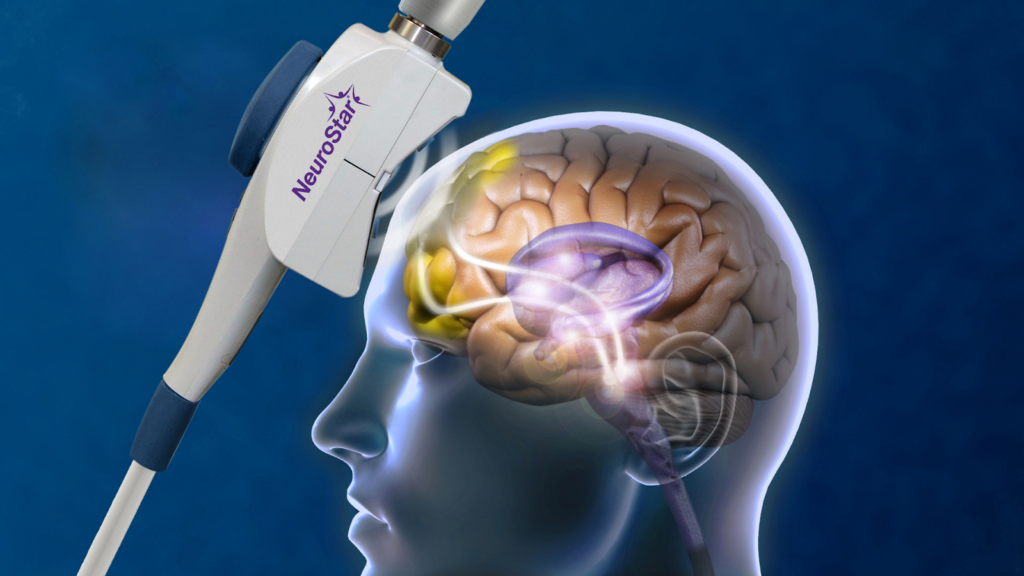
Yes, Transcranial Magnetic Stimulation (TMS) can physically change your brain’s wiring. This FDA-cleared treatment uses magnetic pulses to target and stimulate specific areas, such as the prefrontal cortex, which helps regulate mood. Over repeated sessions, this stimulation encourages neurons to build new connections and strengthen current pathways.
It’s a direct application of neuroplasticity, your brain’s ability to adapt. For many people who haven’t responded to medication, TMS provides a different, evidence-based route to improvement. The science is backed by clinical trials and patient outcomes. To learn how the process works and what it could mean for you, continue reading.
Key Takeaways
- TMS promotes neuroplasticity, the brain’s inherent ability to form and strengthen new neural pathways through targeted magnetic stimulation.
- The therapy’s effects are rooted in measurable biological processes, including increased neurotransmitter activity and long-term potentiation of synaptic connections.
- Successful, lasting rewiring often depends on pairing TMS sessions with supportive behavioral therapies to reinforce the new neural circuits.
The Science of Brain Rewiring with TMS
You see it in the way a city rebuilds after a storm, not just repairing the old roads but sometimes laying down entirely new ones where they’re needed most. The brain, in its own silent way, does much the same thing.
It’s a concept called neuroplasticity, and for a long time, medicine viewed the adult brain as relatively fixed, its highways set in concrete.
Now we know that’s not true. The pathways can change. The question for many struggling with persistent depression or OCD is how to safely encourage that reconstruction. That’s where the conversation about Transcranial Magnetic Stimulation begins.
Does TMS Actually Rewire the Brain?
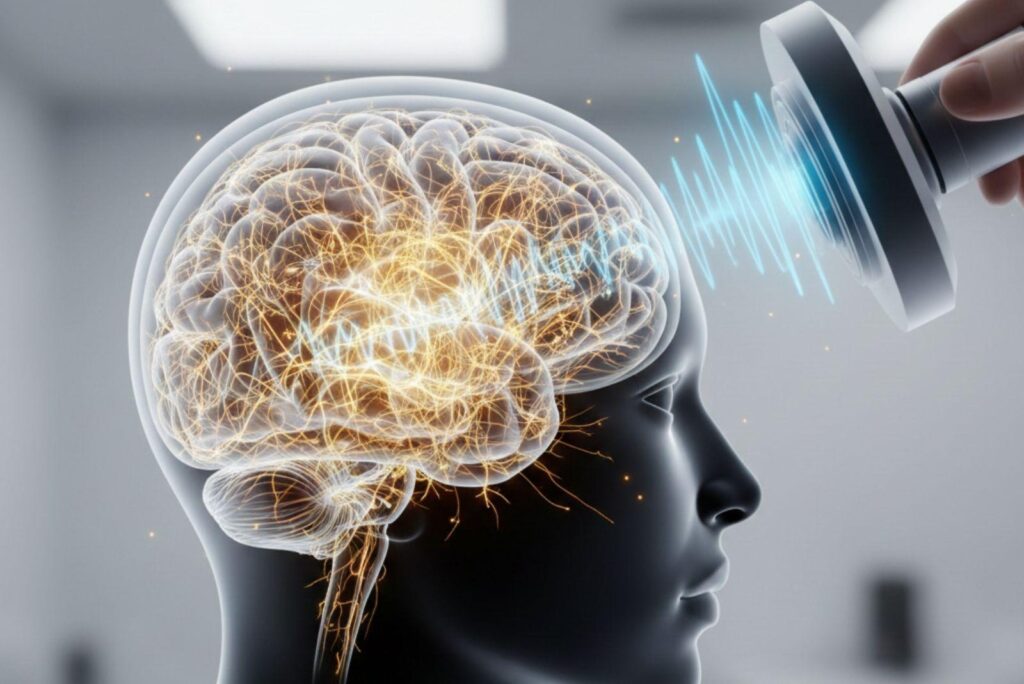
It does. The rewiring isn’t metaphorical. TMS facilitates brain rewiring by leveraging the brain’s own neuroplasticity to strengthen or weaken specific neural connections.
It uses a focused magnetic field, delivered through a coil placed on the scalp, to create a gentle electrical current in a targeted region of the brain’s cortex.
For conditions like major depressive disorder, including cases addressed through TMS therapy for depression, the primary target is often the dorsolateral prefrontal cortex, a key area for mood regulation that can show reduced activity.
This non-invasive process induces neuronal activity where it may be lacking.
- It depolarizes neurons, prompting them to fire.
- It influences the release of neurotransmitters like serotonin and dopamine.
- It initiates a cascade of cellular events that support synaptic growth.
Think of it as a targeted signal, a repeated nudge to a specific neighborhood in the brain, encouraging it to wake up and start communicating more effectively with the rest of the city.
The Pulse and The Pathway: How Magnetic Stimulation Triggers Change
So how does a magnetic pulse translate into a structural change in brain wiring? The mechanism hinges on a fundamental principle of learning and memory in the brain called Long-Term Potentiation, or LTP.
When a neural pathway is used repeatedly, the synaptic connections, the gaps between neurons where signals jump, become more efficient. They strengthen. TMS, particularly in its repetitive form (rTMS), is designed to induce an LTP-like effect.
The treatment utilizes repetitive pulses to encourage this process. By rhythmically depolarizing neurons in the prefrontal cortex, TMS doesn’t just create a single spark. It trains the neurons to fire together more readily.
This repeated stimulation builds more durable, high-speed pathways between them. It’s the difference between walking a dirt path once and paving a road after traveling it daily for weeks. This activity increases vital neurotransmitter release and synchronizes firing patterns. The effect isn’t just local.
The stimulated cortex is deeply connected to deeper brain structures like the limbic system, which governs emotion, a network-level relationship that helps explain why growing clinical evidence shows TMS works for anxiety as emotional regulation pathways regain stability.
By modulating the cortex, TMS’s influence ripples outward, helping to restore balance across an entire network. The formation and strengthening of these synaptic connections is the physical basis of the rewiring.
Measurable Effects: What Brain Scans Show Us
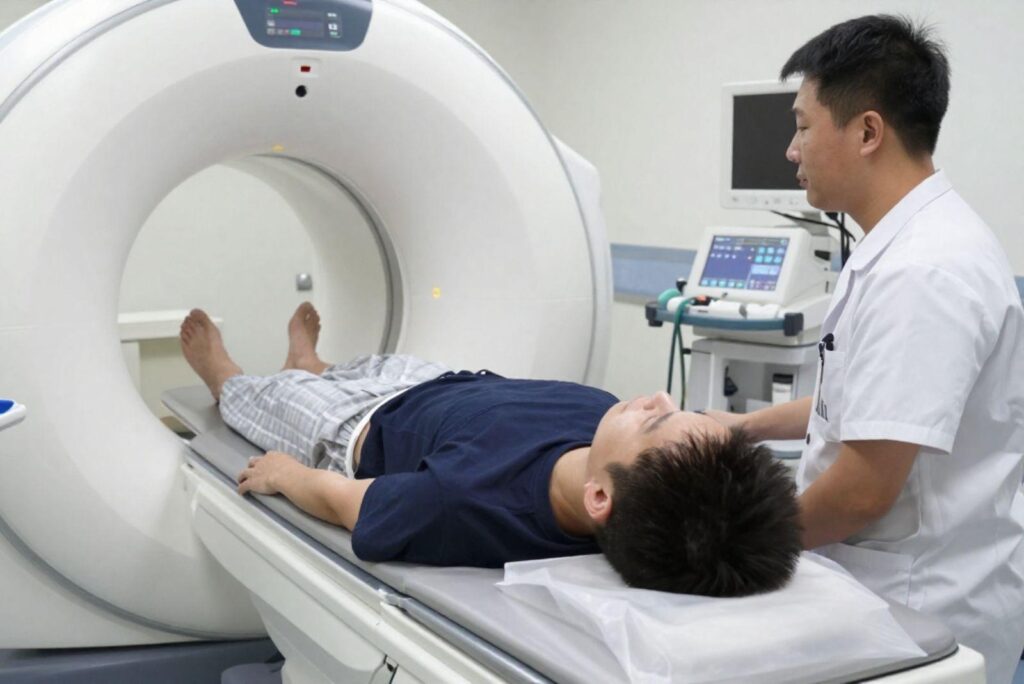
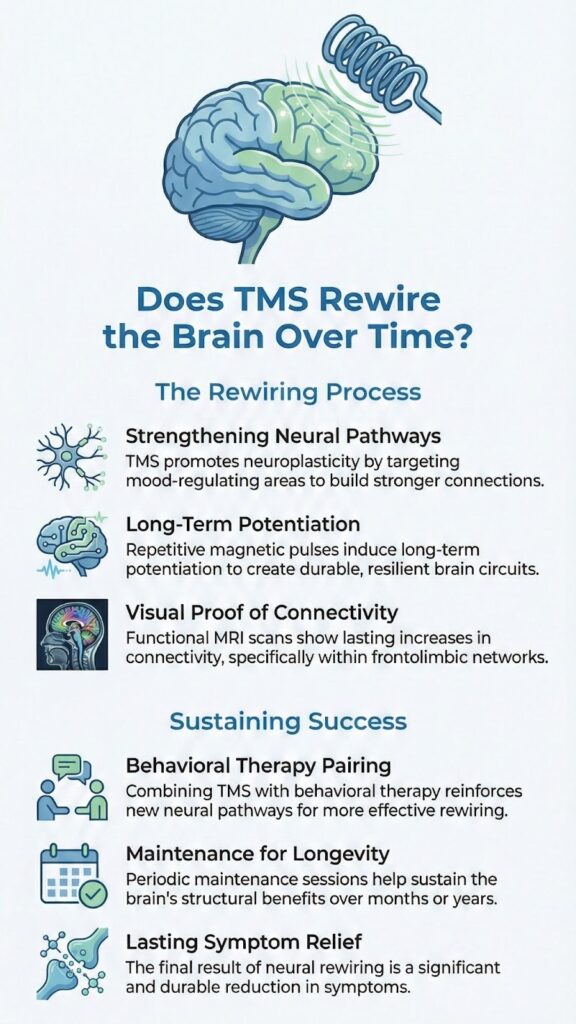
The promise of rewiring is supported by more than theory. Clinical evidence from functional MRI (fMRI) studies confirms that rTMS protocols produce observable, functional shifts in brain connectivity. These changes can persist for months or years, depending on the condition and the use of maintenance strategies.
“The brain’s adaptation is not uniform; it varies significantly based on the clinical target, ” — Zhang R, Wang, (2025) [1].
For major depressive disorder, successful TMS therapy is often linked to strengthened frontolimbic connections. This means better communication between the logical prefrontal cortex and the emotional limbic centers.
In stroke recovery, the focus might be on restoring cerebellothalamocortical pathways, helping to re-establish motor commands. Research into cognitive impairment has shown TMS can help normalize activity in hippocampal subregions, areas critical for memory.
Consider the outcomes across different conditions:
| Condition | Key Brain Changes | Duration of Effects |
| Treatment-Resistant Depression | Strengthened frontolimbic connections, increased prefrontal activity | Months to years, often with periodic maintenance sessions |
| Stroke Recovery | Restored cerebellothalamocortical motor pathways | Can accelerate healing and functional retraining |
| Obsessive-Compulsive Disorder | Modulation of cortico-striato-thalamo-cortical circuit activity | Improvement sustained post-treatment series |
These aren’t abstract ideas. They are visual, quantifiable differences on a brain scan, correlating with real-world improvements in mood, movement, and thought patterns for many patients.
Patient Realities: Brain Fog and the Variability of Response
While clinical success rates for treatment-resistant depression are significant, data reported through NeuroStar Advanced TMS Therapy.
Online patient communities, like those on Reddit, provide an unfiltered counterpoint to clinical data. Some users report periods of “brain fog,” a subjective feeling of mental cloudiness or numbness, especially in early treatment stages, symptoms that fall within the common side effects of TMS as neural circuits adapt to repeated stimulation.
One user described a sensation akin to a “part of my brain turning off,” which was frightening. Others note a temporary increase in anxiety or fatigue. These experiences highlight a hard truth: outcomes depend heavily on individual neurophysiology.
This variability isn’t a failure of the treatment. It’s a reflection of the complexity of the brain itself. For some, the rewiring process might involve a temporary period of adjustment as old, maladaptive pathways quiet down and new ones are under construction.
It underscores why TMS is administered under clinical supervision, where such experiences can be monitored and managed.
Is the Rewiring Permanent?
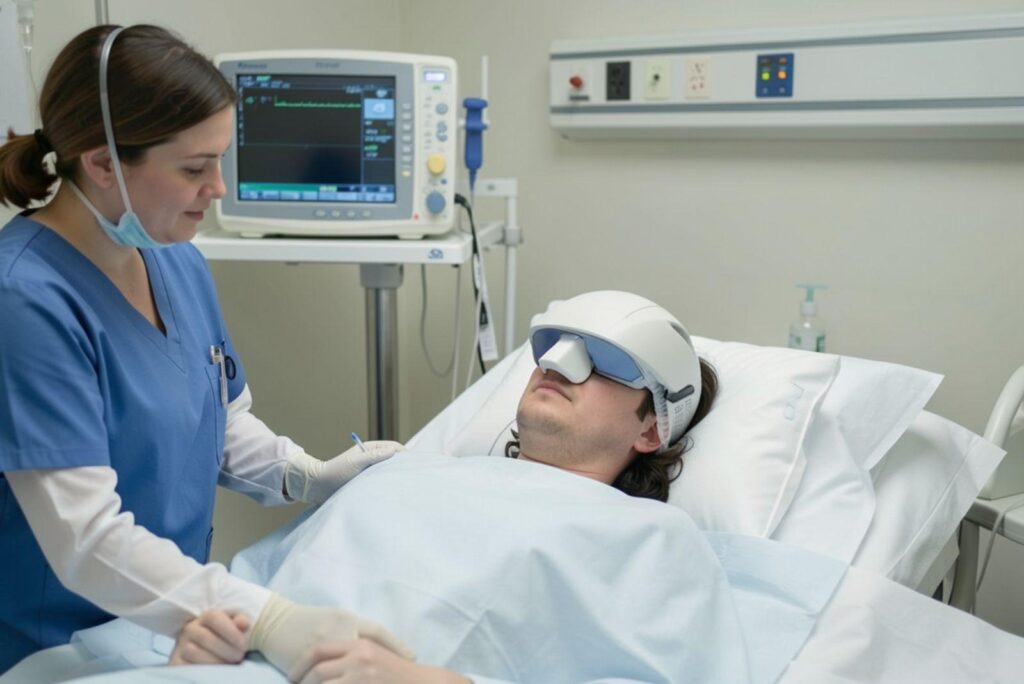
This is the most common question, and the answer is nuanced. The neural changes induced by a standard acute TMS course are durable, but not always permanently fixed without reinforcement. Think of the new pathways like a freshly cleared trail in a forest. If no one walks it, it will eventually begin to grow over again.
Lasting structural remodeling is most effective when the daily 30-minute sessions are paired with active behavioral reinforcement.
This is why clinics often encourage patients to engage in therapy, mindfulness, or positive activity scheduling during their treatment period, especially across the structured timeline of a typical TMS treatment course where repetition is essential for reinforcing synaptic change.
You are, in a sense, training your brain to use its new wiring. For many, the positive shifts in mood and cognition create a virtuous cycle, making it easier to engage in those very behaviors that solidify the gains.
For some patients, periodic maintenance TMS sessions are recommended to sustain the synaptic gains, much like occasional upkeep preserves a road. The goal of the initial treatment is to break the stubborn cycle of illness and provide a window of opportunity. What you and your brain do with that window determines the long-term landscape.
| Factor | Influence on Brain Rewiring | Why It Matters |
| Number of Sessions | Higher session counts strengthen neural adaptation | Repetition supports long-term potentiation |
| Behavioral Therapy | Reinforces new neural pathways | Encourages real-world use of rewired circuits |
| Maintenance TMS | Helps sustain synaptic changes | Prevents regression over time |
| Patient Engagement | Improves durability of results | Active use keeps pathways functional |
Final Thoughts on Neural Remodeling
The idea that we can gently guide our own brain’s reconstruction is a powerful one. TMS offers a tool for that guidance, a method grounded in the science of neuroplasticity. It provides a direct, non-invasive way to stimulate the brain’s innate capacity to heal and reorganize itself.
The process is real, measurable, and for many who had lost hope after medication trials, profoundly life-changing.” — Peng Zhang, MD, et al. (Principal Investigators of the TMS neuroplasticity study) [2].
It is not a passive miracle cure. It’s a catalytic treatment. Its full potential is unlocked when the electromagnetic stimulation from the device is met with conscious engagement from the individual. The magnetic pulses open the door, but walking through it and exploring the new terrain is a shared effort.
If you’ve been on a long and frustrating path with traditional treatments, understanding this science might be the first step toward a different kind of journey. Consider speaking with a clinical provider to see if your brain’s wiring could benefit from a targeted update.
How TMS Rewires the Brain for Long-Term Mental Health Change
For those ready to explore what targeted neuroplastic change could look like in real life, TMS of the Carolinas offers NeuroStar Advanced TMS Therapy in a supportive clinical setting, helping adults with treatment-resistant depression access a non-invasive, medication-free option backed by science and delivered close to home in North Carolina.
References
- https://pmc.ncbi.nlm.nih.gov/articles/PMC12095301/
- https://clinicaltrials.gov/study/NCT02867670