
What is TMS Therapy

Learn More About TMS Therapy

Awake and Alert
You can read or watch TV during treatment sessions and drive home or to work after your treatment with no restrictions.

Safe and Non-Invasive
NeuroStar Advanced Therapy TMS is non-invasive and non-systemic. The only side effect is the possible minor irritation of the scalp.

Not a Clinical Trial
TMS Therapy is an FDA-cleared treatment for depression (MDD). It’s also cleared to reduce anxiety symptoms in adults with depression (anxious depression) and as an add-on treatment for OCD.
What is Transcranial Magnetic Stimulation (TMS)?
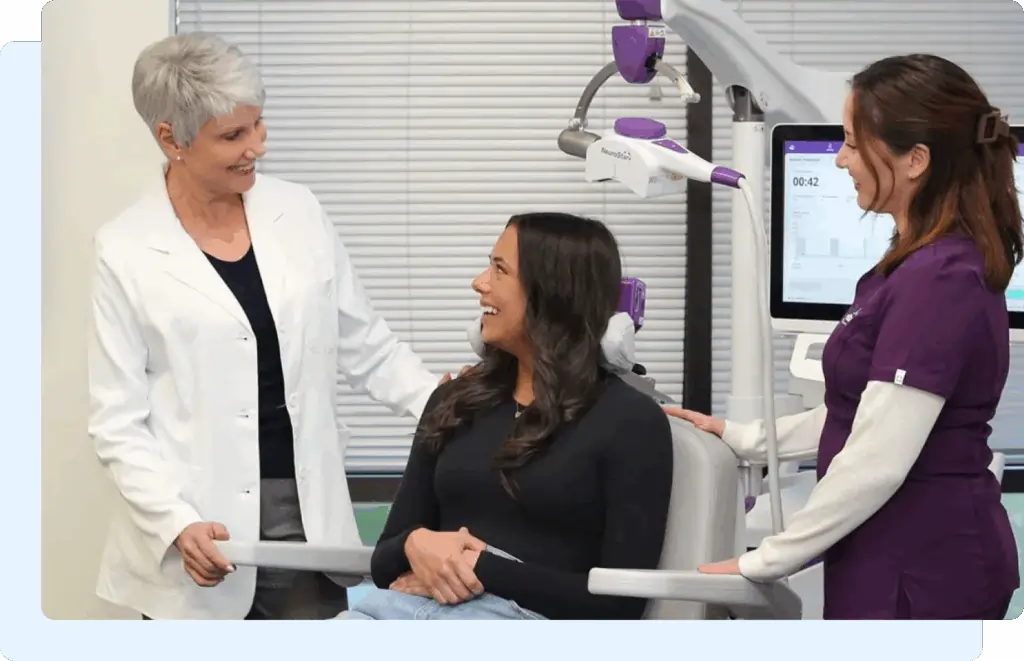
Transcranial Magnetic Stimulation (TMS), a non-drug treatment for major depression. During the TMS treatment sessions, a magnet that is similar in strength to one that is utilized in an MRI (magnetic resonance imaging) machine, is used to stimulate the nerve cells in the brain area that are thought to control a person’s mood. These magnetic pulses can have a positive effect on an individual’s brain transmitter levels which can make long-term remission possible.
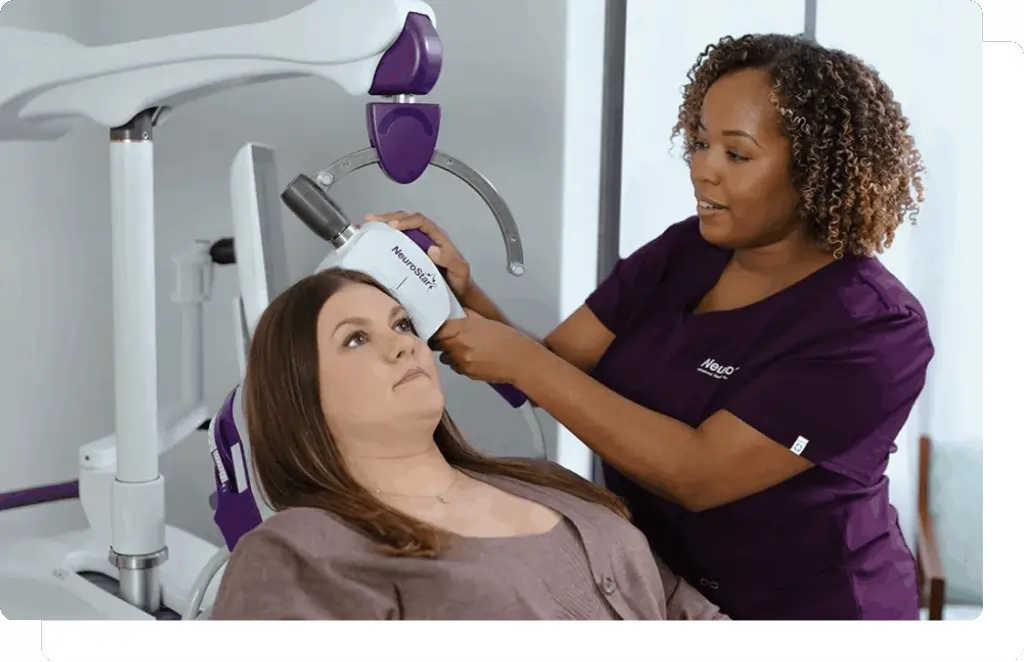
NeuroStar Advanced Therapy TMS is not a drug, “shock therapy”, surgery, or clinical trial. It is a safe, effective treatment for depression without the side effects of medication. It’s an outpatient procedure performed right in our relaxing, spa-like office.
Conditions We Treat With TMS Therapy
NeuroStar TMS is FDA-cleared for the conditions below. During your free consultation, we’ll confirm whether TMS fits your history.
ADULTS
Depression (Major Depressive Disorder)
For adults whose depression hasn’t improved enough with antidepressant medication.
ADULTS
Anxious Depression
FDA-cleared to reduce anxiety symptoms, like constant worry and restlessness, in adults with depression.
ADULTS · ADD-ON
Obsessive-Compulsive Disorder (OCD)
FDA-cleared as an add-on to current care, targeting intrusive thoughts and compulsions.
AGES 15–21 · ADD-ON
Teen Depression
FDA-cleared as an add-on treatment for depression in adolescents, alongside current care.
Need results sooner?
Fast Track TMS is a shorter treatment schedule for eligible patients.

What to Expect from TMS Treatment Sessions
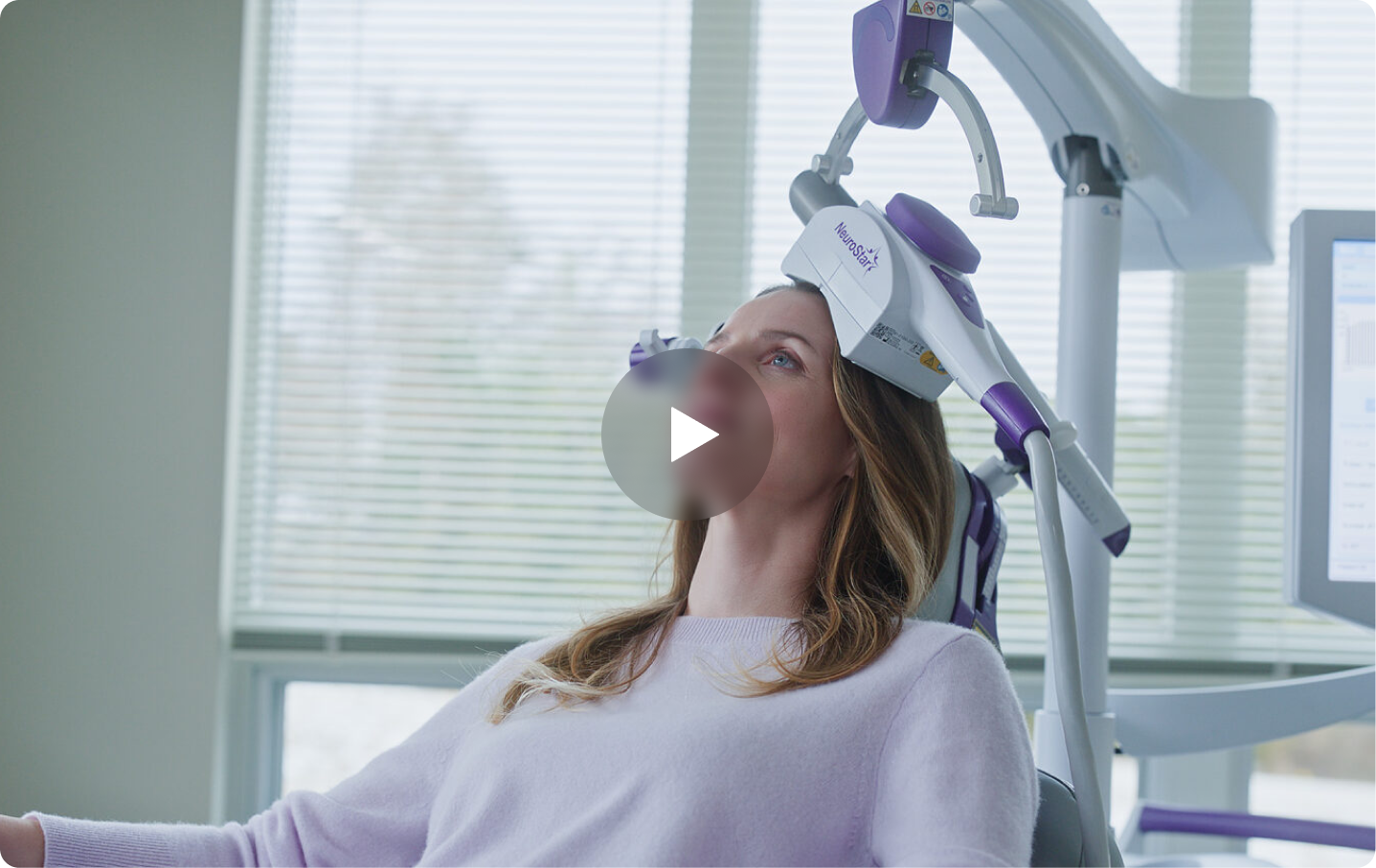
TMS therapy is the first non-systemic and non-invasive outpatient depression treatment cleared by the US Food and Drug Administration (FDA) for patients who have not benefited from prior antidepressant treatment. TMS uses highly focused, pulsed magnetic fields to stimulate function in targeted brain regions. TMS therapy is:
- Non-invasive, meaning that it does not involve surgery. It does not require any anesthesia or sedation, as the patient remains awake and alert during the treatment.
- Non-systemic, meaning that it is not taken by mouth and does not circulate in the bloodstream throughout the body.

Is TMS Right For YOU?
TMS therapy may be right for you if you agree with two or more:
- Depression symptoms have interfered with my daily life.
- I am not satisfied with the results I get from depression medication.
- I have had or worry about side effects from depression medications.
- I am interested in a proven, non-drug therapy for depression.
While depression medications work for many people, some people still do not feel relief. For hard-to-treat depression where medication is not giving you adequate relief, TMS is a proven and safe depression treatment option.
TMS Therapy FAQS
What is TMS Therapy?
TMS therapy is an innovative, FDA-cleared therapy that can help people who struggle with MDD even after taking antidepressant medication. It helps activate the natural function of the brain’s neurotransmitters using a non-invasive magnetic field, and is not ECT (electroconvulsive therapy).
How does TMS Therapy work?
Is TMS Therapy covered by my insurance?
Due to its innovative treatment and proven efficacy, TMS Therapy may be covered by your insurance health plan. Many insurance companies have established medical coverage policies for TMS Therapy. Over 300 million patients have insurance policies that cover TMS Therapy through their health plans.
Is TMS Therapy a good alternative for patients who cannot tolerate the side effects associated with antidepressant medications?
TMS is non-systemic (does not circulate in the blood throughout the body), so it does not have side effects such as weight gain, sexual dysfunction, nausea, dry mouth, sedation, etc. The most common side effects reported during clinical trials were headache and scalp discomfort, generally mild to moderate, occurring less frequently after the first week of treatment.
Is TMS Therapy like other alternative therapies which use magnets to treat some illnesses?
No. TMS Therapy involves a unique method of using pulsed magnetic fields for therapeutic benefit. The intensity of the magnetic field is similar to that of the magnetic fields used in magnetic resonance imaging, or MRI. These techniques differ radically from the popular use of low intensity, static magnetic fields. These products deliver weak and undirected static fields that are not capable of activating brain cells.
Questions About TMS Therapy?
Contact us to schedule a time for coffee and conversation.

Mon – Fri: 8:30 – 11:00 and 1:30 – 4:00
No obligation – Just conversation