
Transcranial magnetic stimulation for OCD shows meaningful response in many patients, with response rates varying by protocol and study design. Some studies report response rates in the mid-30% range, while real-world deep TMS cohorts have reported higher rates.
These numbers reflect moderate but real benefits, especially in treatment-resistant cases. OCD is harder to treat than depression because the brain circuits involved are deeply reinforced over time.
That makes change slower, and sometimes less complete. For patients who have not improved with medication or therapy, TMS offers a structured, targeted option that works directly on those circuits. Continue reading to see what “success” looks like in practice and how outcomes vary between patients.
Key Takeaways
- TMS for OCD demonstrates response rates around the high 30% range in some clinical trials and about 58% in one real-world deep TMS cohort.
- Success is defined as ≥30% reduction in Yale-Brown Obsessive Compulsive Scale (Y-BOCS) scores, not full symptom elimination
- Outcomes depend heavily on coil type, brain targeting, and integration with behavioral therapy
TMS For OCD Delivers Real Results But Method Matters
The neurobiological mechanism of TMS in treating obsessive-compulsive disorder diverges fundamentally from standard protocols utilized for major depressive disorder. This variance is due to the involvement of subcortical neural pathways located at a greater anatomical depth, which presents a structural barrier to superficial magnetic pulses.
When evaluating options like TMS Therapy For OCD, understanding this distinction is crucial to setting accurate clinical expectations.
In clinical trials, about 38 percent of patients respond. That number is steady across multiple studies. Sham-controlled studies show that active TMS outperforms sham treatment, although exact sham response rates vary across studies.
“deep transcranial magnetic stimulation was associated with a significantly greater improvement in OCD symptoms compared with sham treatment.” – National Institutes of Health
But results depend on how the treatment is done.
OCD involves a loop in the brain. The cortico striato thalamo cortical circuit. It connects areas like the anterior cingulate cortex and medial prefrontal cortex. These regions sit below the surface.
Standard TMS may have more limited access to deeper OCD-related circuits than deep TMS or carefully targeted protocols.
At TMS of the Carolina, the approach focuses on depth and precision. Because if the target is missed, the effect drops. Sometimes to zero.
- About 38 percent respond in trials
- Higher rates seen with adjusted protocols
- Clear difference compared to placebo
Deep TMS Improves Access To OCD Circuits
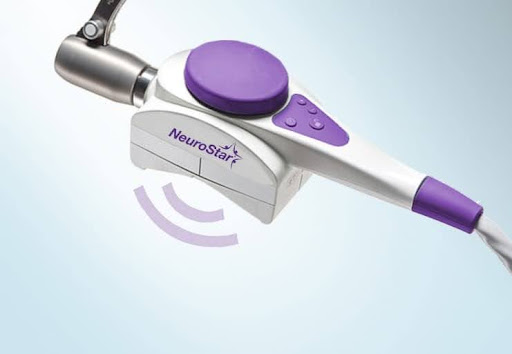
Deep TMS (dTMS) architecture incorporates specialized H-coil configurations engineered to safely propagate magnetic flux to these subcortical targets.
This depth-penetration capability is clinically vital, given that the underlying pathophysiology of OCD is driven by dysregulation within deep structures rather than superficial cortical networks.
When deeper circuits are reached, patients often show better responses. Not instantly. But over time.
And sometimes, the difference is noticeable by mid treatment. A bit less urgency. A bit more control.
Success In OCD Means Reduction Not Elimination
Expectations matter here.
Success in OCD treatment does not mean symptoms vanish. It means they become manageable.
Clinicians use the Yale Brown Obsessive Compulsive Scale. It scores severity from 0 to 40. Data shows how how effective TMS for OCD is tied directly to these standardized drops in metrics rather than total symptom eradication.
“treatment response is typically defined as a 30% or greater reduction in Yale-Brown Obsessive Compulsive Scale (Y-BOCS) scores.” – review indexed by PubMed
So if someone starts at 30, dropping to 20 is meaningful.
- 30 percent reduction equals clinical response
- 20 percent is partial improvement
- Lower scores suggest remission
Patients often still have intrusive thoughts. But the intensity drops. The urge to act on them weakens.
What A Successful Outcome Feels Like
Patients describe it in simple terms.
The thought is still there. But it no longer controls the next action.
That shift matters more than complete silence.
Real World TMS Results Are Often Higher Than Trials

Clinical trials are controlled. Fixed settings. Limited flexibility.
Real clinics adjust treatment. That changes outcomes.
One real-world deep TMS study reported a 57.9% response rate after 29 sessions, with sustained response often appearing around 20 sessions.
Clinical VS Real World Outcomes
| Metric | Clinical Trials | Real World Care |
| Full Response | About 38 to 45 percent | About 57 to 64 percent |
| Partial Response | Around 50 percent | Up to low 70 percent |
| Onset | Weeks 4 to 6 | Around session 18 to 20 |
| Sustained Effect | Often maintained | Varies by patient |
Symptom Provocation Improves Treatment Response
Before each session, patients are asked to focus on a mild version of their obsession.
This is called symptom provocation.
It may feel uncomfortable. But it is controlled.
Why do it? Because active brain circuits respond better to stimulation.
- Activates the OCD loop
- Improves targeting accuracy
- Enhances response over time
Activating The Circuit Makes Treatment More Effective
If the circuit is quiet, stimulation has less impact.
If it is active, the brain is more responsive. More open to change.
Combining TMS With ERP Improves Long Term Outcomes
While exploring how TMS Help with OCD reveals strong standalone data, results tend to last longer when paired with behavioral therapy. Exposure and Response Prevention (ERP) remains the psychological standard, teaching patients to face triggers without performing compulsions.
However, ERP can be incredibly difficult to tolerate. TMS can reduce symptom intensity first, making ERP much more manageable by:
- Lowers baseline anxiety
- Improves participation in therapy
- Supports long term change
Technical Precision Affects Outcomes More Than Expected
Small details matter more than expected.
The magnetic field weakens quickly with distance. So depth matters.
Positioning matters too. Even a slight shift can miss the target.
- Coil type determines depth
- Placement affects accuracy
- Small errors reduce effectiveness
Accelerated TMS Is Being Studied For Faster Results

Standard TMS takes several weeks. That is the current model. One session a day, five days a week.
But newer protocols try to shorten that timeline. Multiple sessions are delivered in a single day. Then repeated over a few days.
Early studies, including work from Stanford, show faster drops in OCD severity scores. In some patients, changes appear within days instead of weeks.
Still, this approach is not widely used yet. It requires close monitoring. Not every patient is a fit.
- Several sessions in one day
- Shorter total treatment time
- Early data shows faster response
Faster Protocols May Change Access To Care
Shorter schedules could make treatment easier to complete. Especially for patients who cannot attend daily sessions for weeks.
But more research is needed. Right now, standard protocols remain the most common.
TMS Response Varies Between Patients

Not every patient responds the same way. That is true for any treatment. But in OCD, the variation is more noticeable.
Some patients improve by the third or fourth week. Others take longer. And some do not respond enough to meet clinical thresholds.
That does not mean nothing changed. Sometimes improvement is partial. Sometimes subtle.
Several factors influence response.
- Severity of OCD symptoms at baseline
- Duration of illness
- Presence of other conditions such as anxiety or depression
- Accuracy of treatment targeting
Even two patients with similar symptoms may respond differently. That is the reality in clinical practice.
Why Some Patients Do Not Reach Full Response
OCD circuits are deeply established. In long standing cases, patterns are more rigid.
If targeting is slightly off, the effect may be limited. If symptoms are severe, more sessions may be needed.
And sometimes, TMS alone is not enough.
That does not make it ineffective. It means it is one part of a broader treatment plan.
What Patients Often Notice During Treatment

Patients rarely describe one clear turning point. It is usually gradual.
At first, small changes. Less time spent on compulsions. Slightly more control. Maybe a bit more space between the thought and the action.
Then more noticeable shifts.
Some patients say the thoughts feel quieter. Others say they can ignore them more easily.
A few common patterns show up.
- Reduced urge to perform rituals
- Less distress when intrusive thoughts appear
- Improved ability to delay or resist compulsions
Limitations Of TMS In OCD Treatment
TMS is not a cure. It is a treatment option with limits.
Not all patients respond. Some respond partially. A smaller group reaches remission.
Also, the effect may fade over time without follow up care. Maintenance sessions or continued therapy are often needed.
There are also practical limits.
- Requires frequent clinic visits
- Not suitable for patients with certain metal implants
- Not always covered by insurance for OCD
Is TMS Worth Considering for OCD?
You’re dealing with thoughts that won’t stop and habits that feel automatic, and it wears you down fast. It’s exhausting. TMS doesn’t fix everything overnight, but it can lower the intensity and give you more control so your day isn’t constantly interrupted.
That’s where TMS of The Carolinas comes in as a practical next step. Their approach focuses on targeted treatment and steady progress, which can make the process feel more manageable. If you’re stuck and nothing else has worked, getting evaluated there could help you move forward.
FAQs
What is the average response rate of TMS for obsessive compulsive disorder?
The average response rate for transcranial magnetic stimulation OCD treatment ranges from about 35% to 64%, depending on the study design and protocol used. Deep TMS OCD and rTMS OCD treatment report similar outcomes.
Clinical improvement is typically defined as at least a 30% reduction in Yale Brown Obsessive Compulsive Scale scores, which reflects meaningful symptom reduction.
How much symptom reduction can TMS provide for OCD patients?
TMS OCD efficacy is commonly measured using the Yale Brown Obsessive Compulsive Scale. Many patients achieve a 25% to 40% reduction in symptom severity, while some reach 55% clinically significant improvement.
These changes often include fewer intrusive thoughts and less frequent compulsive behaviors such as checking, contamination fears, and symmetry-related rituals.
Does TMS work for treatment-resistant or medication-resistant OCD?
TMS is used for treatment-resistant obsessive compulsive disorder, including cases that are medication-resistant, SSRI-resistant, or psychotherapy-resistant. It is generally considered a third-line or fourth-line treatment option.
TMS OCD brain stimulation targets neural pathways such as the cortico-striato-thalamo-cortical circuit, which plays a central role in obsessive thoughts and compulsive behaviors.
How many TMS sessions are needed to see results in OCD treatment?
Most TMS OCD treatment protocols involve 20 to 36 sessions delivered over several weeks, usually at a frequency of five sessions per week. Some studies report measurable improvement after about 29 sessions during the acute phase.
The total session count depends on individual response, symptom severity, and adherence to the prescribed treatment protocol.
How long do TMS results last for OCD after treatment ends?
TMS OCD outcomes can last for several months after treatment, especially in patients who achieve strong clinical improvement. Follow-up studies show sustained response in many cases, although some individuals require booster sessions or maintenance sessions.
Long-term results depend on individual response, ongoing care, and the severity of symptoms before treatment begins.
References
- https://pmc.ncbi.nlm.nih.gov/articles/PMC6746632/
- https://pmc.ncbi.nlm.nih.gov/articles/PMC7059159/