
How does TMS work for anxiety? TMS works for anxiety by sending targeted magnetic pulses to specific brain regions. These pulses help calm the neural patterns tied to fear and excessive worry.
FDA-cleared TMS is approved for major depressive disorder, OCD, and anxious depression. Research into standalone anxiety disorders is still growing, but those uses are not yet FDA-cleared.
At TMS of the Carolinas, every recommendation starts with your diagnosis, your symptom history, and how you have responded to past treatment. Keep reading to understand the science, what the evidence shows, and what you can realistically expect.
Key Takeaways
- TMS is FDA-cleared for anxious depression. This means anxiety symptoms that occur alongside major depressive disorder. It is not cleared for generalized anxiety disorder or standalone anxiety conditions.
- Current evidence is strongest when anxiety appears as part of depression, not as a separate diagnosis on its own.
- Research into TMS for GAD and PTSD is growing. These uses are still investigational and are not part of standard clinical guidelines yet.
What Is TMS and How Does It Affect Anxiety?
TMS is a non-invasive treatment. It uses gentle magnetic pulses to stimulate specific brain areas involved in mood and emotional regulation.
For people with anxious depression, these brain networks often do not communicate as well as they should. Anxious depression means anxiety symptoms that occur alongside major depressive disorder (MDD).
One distinction matters here. TMS Therapy for Anxiety is FDA-cleared for anxious depression, MDD, and OCD. It is not FDA-cleared for anxiety disorders on their own.
That includes generalized anxiety disorder (GAD), panic disorder, and PTSD. When doctors talk about TMS for anxious depression, they are treating depression that includes significant anxiety symptoms. They are not treating anxiety as a separate condition.
According to the National Institute of Mental Health (NIMH),
“Anxiety disorders are among the most common psychiatric conditions in the United States. The National Institute of Mental Health reports that approximately 30% of adults experience an anxiety disorder at some point during their lifetime.” –NIMH.
Researchers have found that anxiety involves several connected brain networks. There is no single “anxiety center.” TMS targets parts of those networks. It helps regulate emotions, manage stress, and control fear responses.
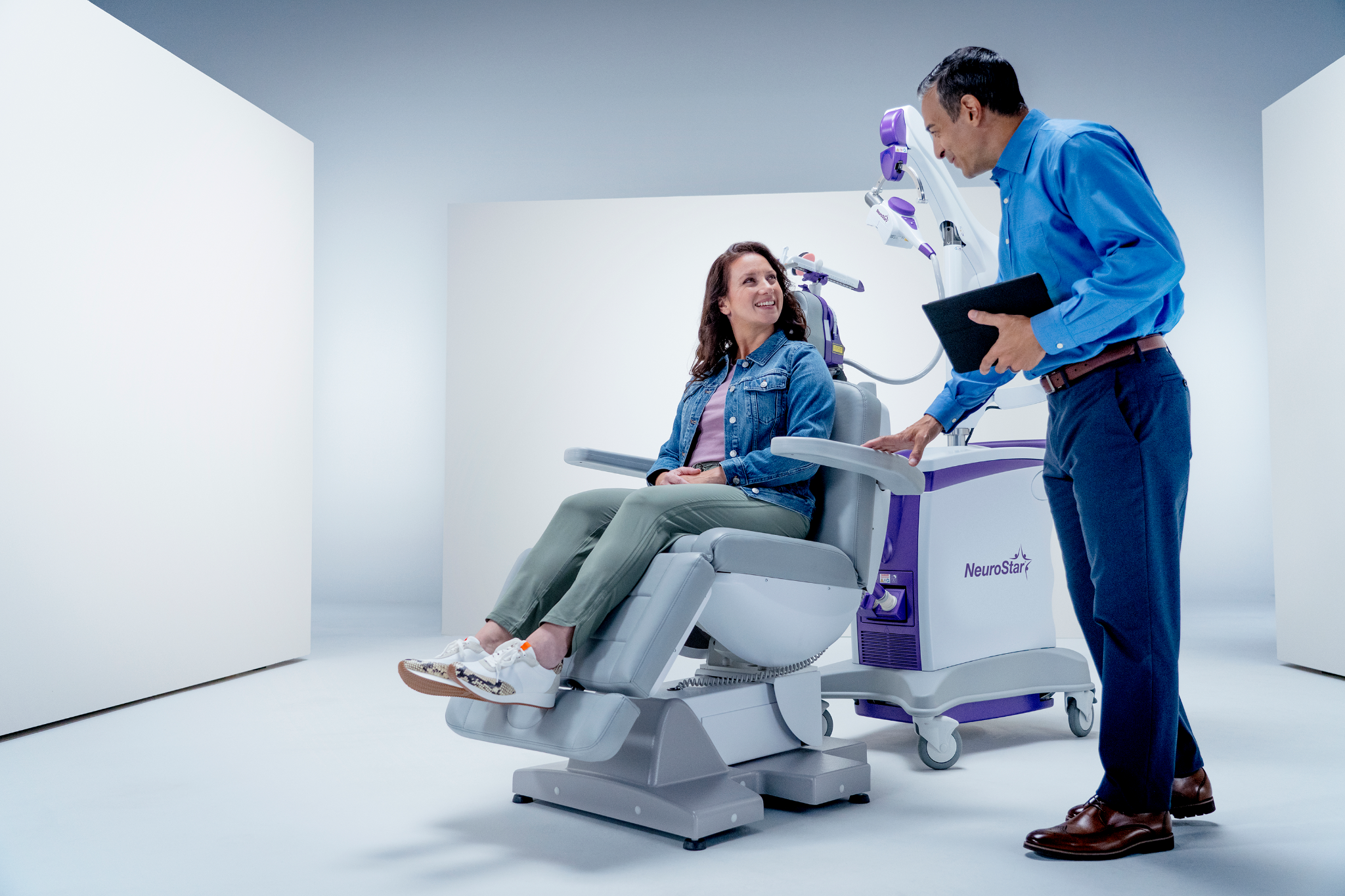
During treatment, a clinician places a coil against the scalp. The coil sends brief magnetic pulses through the skull. These pulses create small electrical currents in the outer layer of the brain. No surgery, anesthesia, or implanted device is needed.
Unlike medication, TMS does not travel through the entire body. It focuses on specific brain regions. Those regions then communicate with deeper emotional centers through existing neural pathways. This targeted approach may help explain why some patients with anxious depression improve over time.
The primary goals include:
- Improving communication between emotional regulation networks
- Reducing excessive activation of fear-processing circuits
- Supporting healthier patterns of brain activity through repeated treatment sessions
Because treatment works gradually, doctors usually recommend completing the full course before deciding how well it is working.
Which Brain Areas Are Involved in Anxious Depression?
In patients with anxious depression where significant anxiety symptoms occur alongside major depressive disorder, several brain regions show abnormal patterns of activity.
One of the most important is the dorsolateral prefrontal cortex (DLPFC). This area helps with decision-making, attention, emotional regulation, and controlling fear responses. Research suggests changes in this network may contribute to persistent worry and hypervigilance.
The amygdala also plays an important role. It detects potential threats and activates the body’s stress response. In many people with anxious depression, this area becomes more active than normal, making stressful situations feel more overwhelming.
Other brain regions also contribute to anxious depression symptoms. The anterior cingulate cortex helps detect conflict and regulate emotional responses.
The insula processes bodily sensations associated with anxiety, such as racing heart and chest tightness. Together with the amygdala and DLPFC, these structures form the broader limbic network that TMS aims to rebalance through repeated stimulation
Rather than targeting one “anxiety center,” TMS aims to improve communication across these connected brain networks so they work together more effectively.
Why do magnetic pulses matter?
Magnetic pulses safely alter how brain cells communicate without damaging any tissue. Repeated stimulation encourages healthier signaling between the dorsolateral prefrontal cortex (DLPFC) and deeper brain regions.
These deeper regions help regulate emotions. Over time, this process may improve emotional regulation and reduce excessive stress responses. It may also strengthen the brain’s ability to manage worry in patients with anxious depression.
The magnetic field only reaches a few centimeters into the brain. Even so, the stimulated areas connect with much larger brain networks.
Those connections allow TMS to influence communication across multiple regions. These regions are involved in mood and anxiety symptoms that occur alongside depression.
How Does TMS Change Brain Activity?

TMS does not create permanent changes after one appointment. Instead, it works through repetition.
Each treatment session delivers carefully controlled magnetic pulses to the same brain region. Over time, repeated stimulation encourages the brain to strengthen healthier patterns of communication. Doctors call this process neuroplasticity, which means the brain’s ability to change and adapt based on repeated activity.
According to the National Institute of Mental Health, (NIMH),
“The brain constantly forms and adjusts connections between nerve cells throughout life. TMS uses that natural ability to support healthier communication within brain networks involved in emotional regulation.” –NIMH.
Most standard treatment plans include approximately 20 to 36 sessions, although the exact number depends on the diagnosis, clinical judgment, and the specific FDA-cleared device being used.
The goal is gradual improvement rather than an immediate effect.
Research suggests that repeated treatment produces stronger changes than isolated sessions because each appointment builds on the changes created during previous treatments. For many patients with anxious depression, meaningful improvement develops over several weeks instead of several days.
What is neuroplasticity?
Neuroplasticity means the brain can strengthen or weaken connections between nerve cells. This happens through repeated activity over time.
Researchers believe repeated TMS sessions reinforce healthier communication pathways in the brain. At the same time, they reduce abnormal signaling linked to chronic fear and excessive worry in anxious depression.
This gradual process may help improve several things:
- Emotional regulation
- Stress responses
- Cognitive flexibility
- Fear extinction
- Executive control which includes planning, attention, and decision-making
Unlike medication, TMS does not change brain chemistry throughout the body. Instead, it focuses on improving communication within specific brain networks. That is why treatment requires multiple sessions. A single visit is not enough to produce meaningful results.
Why are multiple sessions necessary?
Brain networks require time to adapt. Each TMS session reinforces the neural changes initiated during earlier treatments, and the cumulative effect of repeated stimulation, repeated stimulation rather than any sin rather than any single session is what drives meaningful improvement in patients with anxious depression.
Current TMS anxiety research suggests that cumulative stimulation is necessary for meaningful changes in brain network function. Clinical studies also show that treatment courses lasting fewer than four weeks generally produce weaker outcomes than standard protocols.
The table below summarizes how neuroplasticity develops during treatment.
| Treatment Stage | Brain Activity |
| Initial sessions | Magnetic pulses activate targeted cortical neurons |
| Weeks 2–3 | Neural communication begins adapting |
| Weeks 4–6 | Functional brain networks continue strengthening |
| After completion | Ongoing consolidation may continue for weeks |
Every patient responds differently. Age, diagnosis, previous treatments, symptom severity, and overall brain health can all influence how quickly those brain networks adapt during treatment.
Which Anxiety Disorders May Benefit From TMS?
Research suggests TMS may help some anxiety-related conditions. The strength of evidence differs depending on the diagnosis.
One distinction is important to understand. Some conditions have FDA-cleared TMS options. Others are still being studied.
TMS is FDA-cleared for three conditions:
- Major depressive disorder (MDD)
- Obsessive-compulsive disorder (OCD)
- Anxious depression — depression that occurs alongside significant anxiety symptoms
TMS is not FDA-cleared for standalone anxiety disorders. This includes GAD, panic disorder, social anxiety disorder, and PTSD.
Researchers continue to study TMS for these conditions. Several early studies have reported encouraging results.
However, most of these treatments remain investigational or off-label. Larger clinical trials are still needed. Researchers want to determine which patients benefit most and which treatment protocols work best.
Current evidence can be summarized as follows:
| Anxiety Condition | Current Evidence |
| TMS for generalized anxiety disorder | Growing but investigational |
| TMS for panic disorder | Emerging clinical evidence |
| TMS for PTSD | Increasing research support |
| TMS for OCD | Separate FDA-cleared protocols |
| Anxious depression | Strongest clinical evidence |
Research continues because studies use different stimulation targets, treatment schedules, and magnetic pulse frequencies. Those differences make it difficult to compare results directly or recommend one standard approach for every anxiety disorder.
At TMS of the Carolinas, patient selection follows established clinical guidelines. NeuroStar provides FDA-cleared treatment for major depressive disorder, obsessive-compulsive disorder, and anxious depression, particularly for patients whose symptoms have not improved enough with antidepressant medication.
NeuroStar is not a first-line treatment for mild depression and is not appropriate for patients with certain implanted medical devices or other medical contraindications identified during evaluation.
Why Does TMS Help Some People When Medication Doesn’t?
Medication helps many people, but it does not work for everyone.
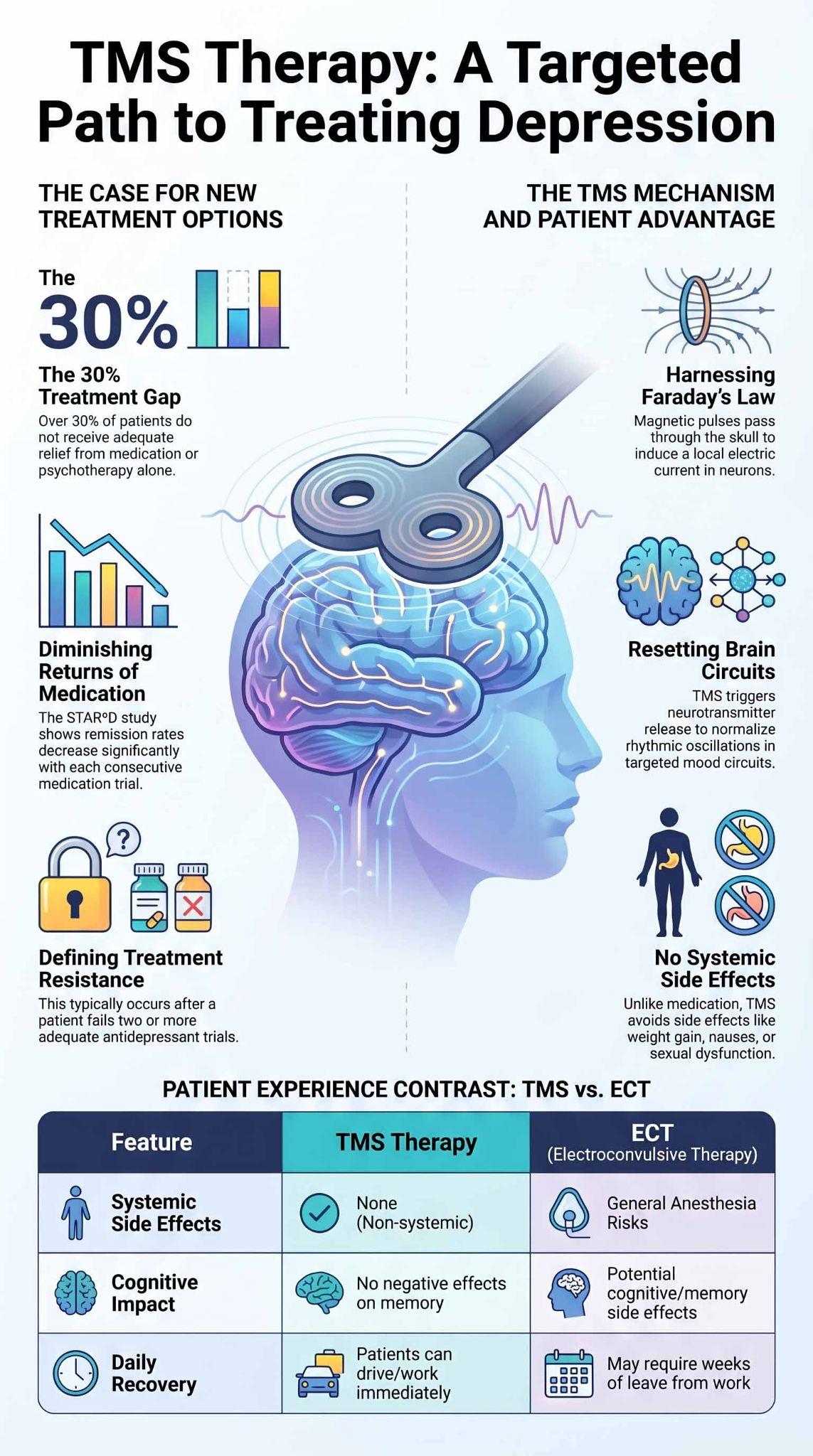
Research consistently shows that approximately 30% to 50% of patients treated for depression do not experience enough improvement after their first antidepressant. Many of these patients also carry significant anxiety symptoms alongside their depression a clinical combination doctors refer to as anxious depression.
When standard treatment has not provided enough relief, TMS may offer another option. Unlike antidepressants, which affect the entire body through the bloodstream, TMS delivers magnetic stimulation directly to brain regions involved in mood regulation.
This distinction is particularly relevant for patients with anxious depression, where dysregulation of the DLPFC-amygdala circuit plays a central role in both depressive and anxiety symptoms.
Doctors believe this targeted approach may improve communication within emotional regulation networks while avoiding many whole-body medication side effects.
That does not mean TMS replaces medication for everyone.
Many patients continue taking medication or participating in psychotherapy while receiving TMS. Doctors often combine treatments because different therapies can support recovery in different ways.
At TMS of the Carolinas, NeuroStar provides FDA-cleared treatment for major depressive disorder, obsessive-compulsive disorder, and anxious depression. The treatment plan depends on each patient’s diagnosis, treatment history, medical condition, and overall goals.
| TMS | Medication |
| Localized brain stimulation | Systemic medication |
| Non-invasive | Oral or injectable medication |
| No daily dosing | Daily medication schedule |
| Minimal systemic side effects | Potential whole-body side effects |
| Office-based treatment | Home administration |
Before recommending TMS, clinicians review symptom severity, previous medication response, medical history, and whether the patient meets FDA-cleared treatment indications.
When might clinicians recommend TMS?
Doctors may consider TMS after conventional treatment has not provided enough symptom relief for major depressive disorder or anxious depression. They do not recommend TMS as a first-line treatment for mild depression, and it is not FDA-cleared for anxiety disorders alone, such as generalized anxiety disorder, panic disorder, or PTSD.
Common situations include:
- Multiple unsuccessful antidepressant trials
- Medication intolerance because of side effects
- Persistent anxious depression
- Ongoing symptoms despite psychotherapy
- Preference for a non-invasive treatment option after appropriate evaluation
Every patient receives an individual assessment before treatment begins.
What Happens During a Typical TMS Session?
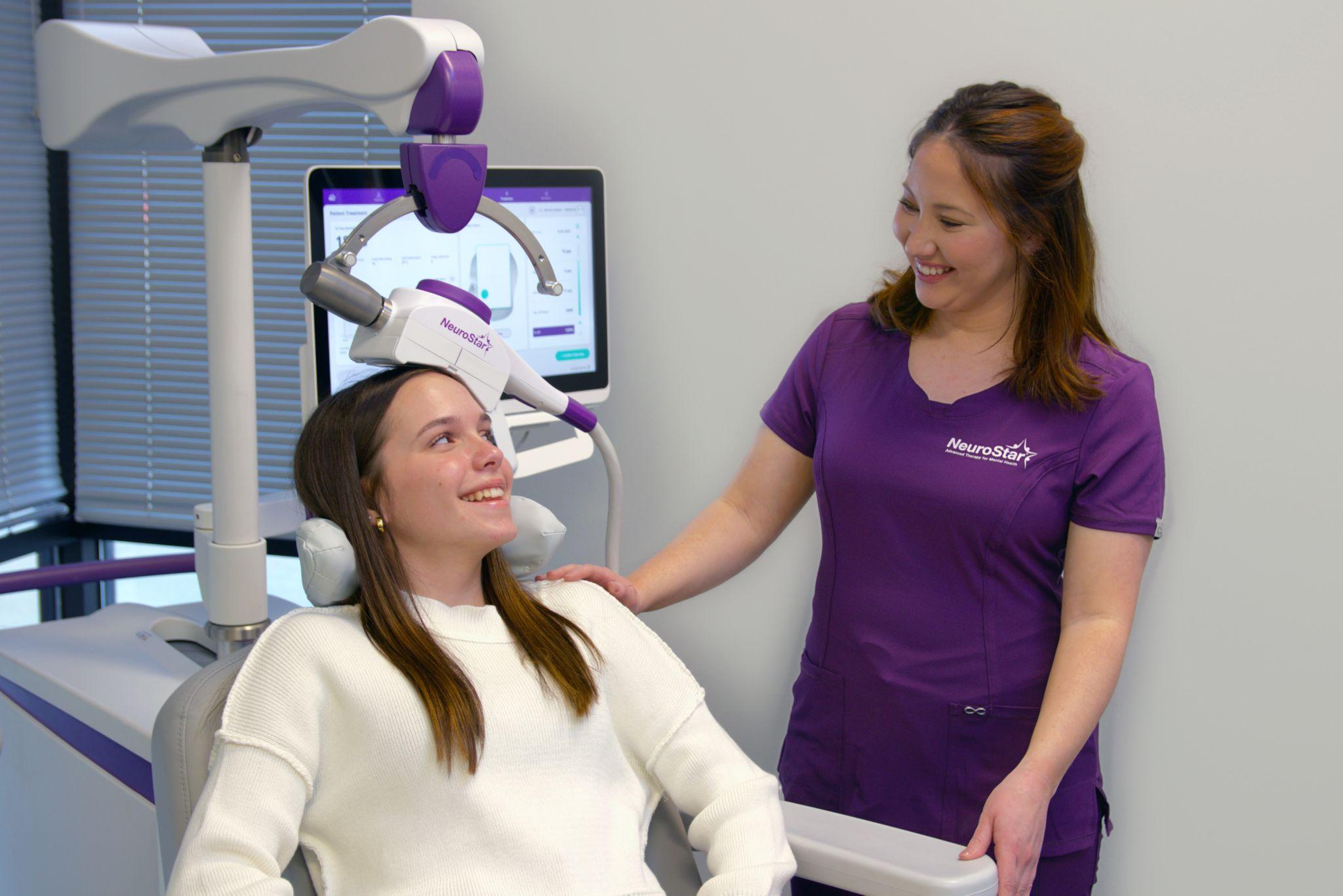
A TMS session takes place in an outpatient clinic, and patients remain awake throughout treatment.
The FDA-cleared NeuroStar system does not require anesthesia, sedation, or recovery time. Most appointments last from several minutes to about 40 minutes, depending on the treatment protocol.
The first visit usually takes longer because the treatment team performs brain mapping and measures the patient’s motor threshold, which is the amount of magnetic energy needed to produce a small muscle response. This measurement helps doctors personalize the treatment settings instead of using the same intensity for everyone.
Treatment generally includes:
- Initial psychiatric evaluation
- Motor threshold measurement
- Personalized coil positioning
- Daily outpatient treatment sessions
- Ongoing symptom monitoring
- Completion of the prescribed treatment course
Most patients return to work, school, or other normal daily activities immediately after each appointment because TMS does not require recovery time.
Throughout treatment, clinicians monitor symptoms and adjust the treatment plan when appropriate.
What does TMS feel like?
Most patients describe TMS as unusual at first but easy to tolerate as treatment continues.
During stimulation, patients often notice a gentle tapping feeling on the scalp along with repetitive clicking sounds from the treatment coil. Some people experience mild scalp discomfort or brief facial muscle contractions near the treatment area, especially during the first few sessions.
Common sensations include:
- Gentle tapping on the scalp
- Clicking sounds from the coil
- Mild scalp discomfort
- Brief facial muscle contractions
Many patients say these sensations become less noticeable over time, and most return to their normal daily activities immediately after each session.
How Long Does It Take Before Anxious Depression Symptoms Improve?
For people receiving TMS for anxious depression major depressive disorder accompanied by significant anxiety—improvement usually occurs gradually over several weeks Most people do not feel dramatically different after the first few treatments, and that is completely expected.
TMS works by encouraging gradual changes in the brain’s communication networks, a process called neuroplasticity, which means the brain can strengthen and reorganize its connections over time. Those changes develop with repeated treatment, not after a single session.
Every person’s recovery looks a little different. Your diagnosis, how long symptoms have been present, previous treatments, how consistently you attend appointments, and the severity of your depression can all affect how quickly you notice improvement.
Many patients first notice small changes rather than a sudden lift in mood. You may sleep a little better, feel less overwhelmed, find it easier to concentrate, or notice that everyday tasks require less effort. Family members sometimes recognize these improvements before the patient does.
Typical improvement timeline
Although every patient responds differently, many treatment courses follow a similar pattern:
- Week 1–2: Getting used to treatment with little change in symptoms
- Week 3–4: Early improvements may begin
- Week 5–6: Many responders notice continued symptom improvement
- After treatment: Brain adaptation may continue during follow-up
Some patients improve sooner, while others need to complete the full treatment course before meaningful changes become clear. Regular follow-up visits help the care team monitor progress and decide whether additional treatment or maintenance therapy may help.
Why do results vary?
Doctors look at several factors when they estimate how someone may respond to TMS. These include the specific diagnosis, whether anxiety occurs alongside major depressive disorder, previous treatment history, symptom severity, and how consistently treatment sessions are completed.
No two brains respond in exactly the same way. That is why clinicians monitor symptoms throughout treatment instead of relying on one timeline for everyone. At TMS of the Carolinas, the care team reviews progress regularly and uses those conversations to guide follow-up recommendations, answer questions, and make adjustments when appropriate.
What Does Research Say About TMS for Anxious Depression and Anxiety Disorders?
Research is still growing. Right now, the strongest evidence supports TMS for anxious depression. This means major depressive disorder that occurs alongside significant anxiety symptoms.
This distinction matters. TMS is FDA-cleared for anxious depression, MDD, and OCD. It is not FDA-cleared for standalone anxiety disorders. That includes GAD, panic disorder, and PTSD.
Whether, does tms work for anxiety as a standalone diagnosis remains an open clinical question. Several published studies have reported encouraging findings, but these treatments remain investigational or off-label. Larger, well-designed clinical trials are still needed.
Scientists want to confirm which patients benefit most and which treatment approaches work best.
A 2023 meta-analysis published in Brain Stimulation examining noninvasive brain stimulation interventions reported meaningful symptom improvement across several anxiety-related conditions, with effect sizes favoring active stimulation over sham treatment across multiple study designs
But researchers also noted important differences between studies. These differences included study design, stimulation targets, treatment schedules, and patient populations. Those variations make it difficult to recommend one standard protocol for every anxiety disorder.
Is TMS Safe for Patients With Anxious Depression?

Doctors generally consider TMS a well-tolerated treatment when patients receive appropriate screening before therapy begins.
Before recommending treatment, clinicians review medical history, current medications, neurological conditions, and any implanted medical devices. This careful evaluation helps identify people who can safely receive treatment and those who may need another approach.
Clinical safety data and published academic research consistently show that most TMS side effects are mild and temporary, resolving on their own as treatment progresses.
Understanding the success rate of TMS for anxiety alongside its safety profile gives patients a more complete picture before starting treatment.
Common side effects
The most commonly reported side effects include:
- Mild headache
- Temporary scalp tenderness
- Facial muscle twitching during stimulation
- Mild discomfort at the treatment site
These symptoms often improve as treatment continues. If discomfort becomes bothersome, clinicians can often adjust the coil position or treatment settings while maintaining therapeutic benefit.
Rare but serious risks
Serious complications remain uncommon. Published safety data estimate that seizures occur in approximately 7 out of every 100,000 TMS treatment sessions a rate considered rare by clinical standards but one that reinforces why thorough pre-treatment screening is essential before every course of treatment
Potential risks include:
- Seizure
- Temporary hearing discomfort without hearing protection
- Treatment intolerance
NeuroStar cannot be used in patients with non-removable conductive metal near the head, cochlear implants, deep brain stimulators, or other contraindicated implanted medical devices. Patients with certain neurological conditions or an elevated seizure risk may also require a different treatment approach.
Who Is a Good Candidate for TMS Anxiety Treatment?
The best candidates for TMS receive an individual psychiatric evaluation before any treatment decision is made.
For NeuroStar, candidacy primarily applies to patients with major depressive disorder, obsessive-compulsive disorder, or anxious depression after standard treatments have not provided enough improvement. Although researchers continue studying TMS for standalone anxiety disorders, those uses are not currently FDA-cleared.
Doctors consider several factors during the evaluation. They review the diagnosis, previous medication trials, response to psychotherapy, medical history, current medications, and possible contraindications before deciding whether TMS is appropriate.
A patient may be a candidate if:
- Anxiety occurs alongside treatment-resistant depression
- Multiple medication trials have not provided enough improvement
- Medication side effects limit treatment options
- Psychotherapy alone has not provided adequate symptom control
- No contraindicated implanted medical devices are present
The goal is to match the right treatment to the right patient rather than recommend TMS for everyone with anxiety symptoms.
When might TMS not be appropriate?
TMS is not right for everyone. There are several situations where it may not be appropriate.
TMS may not be suitable for people with:
- Certain implanted medical devices
- An elevated seizure risk
- Medical conditions that make treatment unsafe
It is also unsuitable if symptoms fall outside FDA-cleared indications or if first-line treatments have not yet been adequately attempted
Careful screening is always done before treatment begins. This protects patient safety and helps determine whether TMS is the right fit or whether another approach may offer greater benefit.
How Does TMS Fit Into a Complete Anxiety Treatment Plan?
For patients with anxious depression, TMS usually works best as one part of a broader treatment plan. It is not a replacement for other forms of care.
Depression with significant anxiety often responds better when several treatments work together. Every patient has different needs. Depending on those needs, clinicians may recommend a combination of approaches alongside TMS.
These may include:
- Psychotherapy
- Medication
- Healthy lifestyle changes
- Regular psychiatric follow-up
What should patients expect after treatment?
Finishing a course of TMS does not mean care stops. Follow-up appointments allow clinicians to monitor symptoms, review progress, and decide whether additional support is needed.
For patients whose symptoms begin returning after completing their initial course, maintenance TMS — typically scheduled as monthly or bimonthly booster sessions may help sustain remission and reduce the risk of relapse.
Follow-up care may include:
- Continued symptom monitoring
- Psychiatric follow-up visits
- Maintenance TMS when clinically indicated
- Continued psychotherapy
- Medication management when appropriate
No treatment can guarantee symptom remission. The best outcomes usually occur when patients receive an accurate diagnosis, complete the recommended course of treatment, and continue working with their mental health team over time.
How TMS Works for Anxiety: Final Takeaways
TMS is a targeted, non-invasive treatment. It works by modulating brain networks involved in emotional regulation. Unlike medication, it does not produce effects throughout the entire body.
The strongest evidence supports TMS for three FDA-cleared conditions: major depressive disorder, obsessive-compulsive disorder, and anxious depression.
For patients with pure anxiety disorders and no depressive component, TMS remains investigational and is not part of standard clinical guidelines.
Research into primary anxiety disorders is still expanding, and clinicians should continue monitoring published trial outcomes as evidence develops.
At TMS of the Carolinas, every patient receives a comprehensive evaluation before treatment begins. This helps determine whether NeuroStar® TMS is appropriate based on diagnosis, clinical history, and treatment goals.
For eligible patients, TMS may provide meaningful symptom relief. This is especially true for those who have not improved with conventional therapies. Treatment also allows patients to maintain their normal daily routines throughout the process.
To find out whether TMS is right for your situation, schedule a consultation with TMS of the Carolinas.
FAQ
Can TMS treat generalized anxiety disorder or panic disorder on its own?
TMS is not FDA-cleared for generalized anxiety disorder, panic disorder, or social anxiety as standalone diagnoses.
Early clinical trials have reported encouraging findings, but these uses remain off-label and investigational until larger controlled studies confirm which patients benefit most and which protocols work best.
TMS produces its most consistent anxiety-related results when significant anxiety symptoms occur alongside a confirmed diagnosis of major depressive disorder.
How does TMS actually reduce anxiety symptoms in patients with anxious depression?
TMS delivers repetitive magnetic pulses to the dorsolateral prefrontal cortex, a region that governs emotional regulation and cognitive control. Repeated stimulation gradually improves communication between the prefrontal cortex and deeper limbic structures, including the amygdala, which drives fear and stress responses.
Over multiple treatment sessions, this process supports healthier emotional regulation patterns and may reduce excessive worry and autonomic arousal in patients diagnosed with anxious depression.
How many TMS sessions does it typically take before anxiety symptoms start improving?
Most patients with anxious depression begin noticing early symptom changes around weeks three to four of a standard treatment course. Neuroplasticity — the brain’s ability to strengthen and reorganize neural connections develops through cumulative stimulation rather than isolated sessions.
Clinical studies consistently show that treatment courses lasting fewer than four weeks produce significantly weaker outcomes, which is why completing the full prescribed course is essential for meaningful improvement.
Is TMS a drug-free alternative for patients who cannot tolerate anxiety medications?
TMS is a noninvasive, drug-free treatment that stimulates targeted brain circuits directly rather than distributing medication through the bloodstream.
For patients with anxious depression who have not responded adequately to antidepressants or who cannot tolerate medication side effects, TMS may offer a clinically appropriate alternative.
A comprehensive psychiatric evaluation is required before treatment begins to confirm the diagnosis and verify that the patient meets established clinical criteria.
Can TMS be combined with psychotherapy or medication for better anxiety outcomes?
Clinicians frequently recommend combining TMS with other treatments for patients with anxious depression.
TMS targets brain circuit activity through neuromodulation, while cognitive behavioral therapy addresses the thought patterns and behavioral responses that maintain anxiety symptoms. Research suggests that combining these approaches may produce stronger and more durable outcomes than either treatment alone.
Medication management may continue alongside TMS when the treating clinician determines it is clinically appropriate based on the patient’s diagnosis and history.
References
- https://www.nimh.nih.gov/health/topics/anxiety-disorders
- https://www.nimh.nih.gov/health/topics/brain-stimulation-therapies/brain-stimulation-therapies