
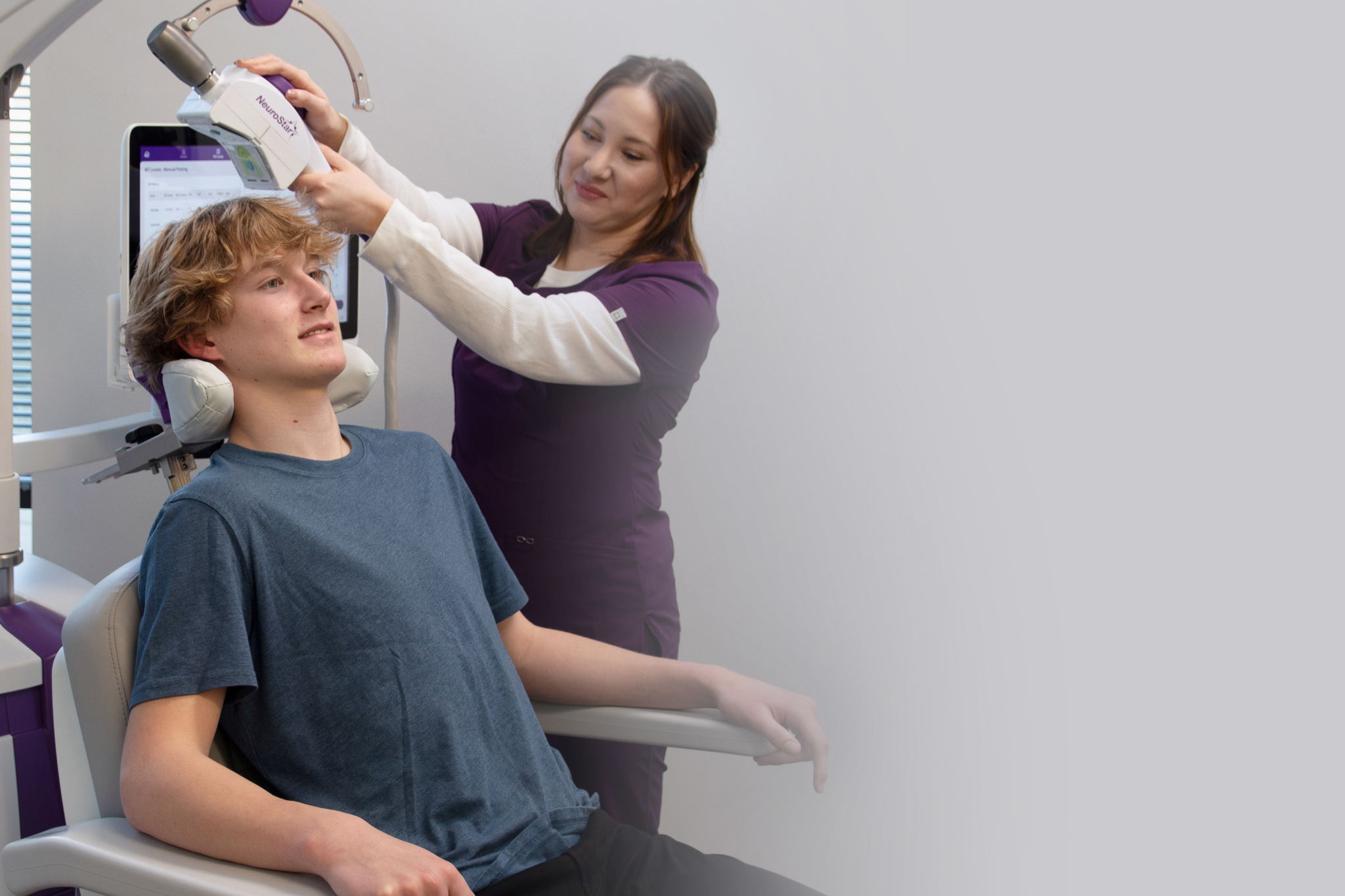
If your teenager's depression hasn't improved with therapy or medication, understanding TMS for adolescents is worth your time.
At TMS of the Carolinas, we work with families in exactly this situation. We use NeuroStar® an FDA-cleared TMS system for eligible adolescents with major depressive disorder. It is not a first-line treatment. Patient selection matters.
Keep reading to understand who may benefit, what the research actually shows, and what your family can realistically expect before moving forward.
Key Takeaways
- TMS for teens is considered only after therapy and medication have not helped enough. A thorough psychiatric evaluation always comes first.
- Research shows some adolescents experience meaningful symptom reduction with TMS. Your child's response will depend on their clinical history and whether they meet treatment criteria.
- Family involvement matters throughout the process. Teens who stay connected to ongoing mental health care alongside TMS tend to see better outcomes.
Understanding TMS for Teenagers
If your teenager has been struggling with depression for a long time, it's natural to ask what comes next. Especially when therapy and medication haven't helped enough.
According to the National Institute of Mental Health (NIMH),
“Major depressive disorder affects an estimated 20% of adolescents aged 12 to 17 in the United States each year.” –NIMH.
When initially diagnosed, many teenagers improve using standard, evidence-based treatments, such as:
- Cognitive Behavioral Therapy (CBT): A type of talk therapy that helps change unhelpful thoughts and behaviors.
- Antidepressant Medication: Standard prescriptions such as SSRIs.
- Combination Therapy: Utilizing both talk therapy and medication simultaneously for comprehensive care.
Some teenagers, however, continue to experience significant symptoms despite appropriate treatment. When depression stays severe or keeps interfering with school, relationships, or daily life a child and adolescent psychiatrist may discuss additional options.
One of those options is TMS Therapy for adolescents. It is a noninvasive treatment that uses magnetic pulses to stimulate areas of the brain involved in mood regulation. It does not replace therapy or medication.
Doctors typically add it to an existing treatment plan when they believe it may provide additional benefit.
At TMS of the Carolinas, every recommendation starts with a comprehensive psychiatric evaluation. We look at your teenager's symptoms, previous treatments, medical history, and overall health before deciding whether NeuroStar, an FDA-cleared TMS system, is the right fit.
Doctors also take time to discuss your family's questions and concerns. Every teenager responds differently to treatment, so there is no one-size-fits-all approach. The decision depends on the complete clinical picture rather than a single diagnosis.
The following characteristics often identify appropriate candidates:
- Persistent depression despite adequate psychotherapy
- Limited improvement after appropriate antidepressant treatment
- Medication side effects that limit continued treatment
- Evaluation and recommendation by a qualified child and adolescent psychiatrist
Before recommending treatment, clinicians also review your child's medical history, previous psychiatric care, current medications, neurological conditions, and any factors that could affect treatment safety. This careful evaluation helps determine whether TMS fits your teenager's overall care plan.
When do doctors recommend TMS?
Doctors generally consider TMS after evidence-based first-line treatments have not provided enough improvement.
Adolescents with persistent depression benefit most from an individualized evaluation by a clinician who specializes in pediatric mental health. A one-size-fits-all approach does not account for the range of factors that influence how depression presents and progresses in younger patients.
Research supports considering TMS for treatment-resistant depression in adolescents when symptoms continue despite guideline-directed care.
Your child's doctor will look at more than the diagnosis alone. Depression severity, previous treatments, medication response, overall mental health, and family support all help determine whether TMS is an appropriate next step. The goal is to recommend the treatment that best fits your teenager's individual needs.
Why isn't TMS usually the first option?
Treatment guidelines recommend therapy and medication first. These approaches help many adolescents recover, which is why doctors start there.
TMS is primarily supported by current evidence for teens who still have significant symptoms after appropriate conventional treatment. It is not a replacement for therapy or medication. When it is recommended, it works alongside them.
Insurance coverage reflects this as well. Most providers require documentation showing that medication trials have been tried and have not worked before approving TMS.
Every teenager is different. Some cannot tolerate medication due to side effects. Others continue to struggle despite several evidence-based treatments. In those cases, a psychiatrist may recommend TMS as part of a broader treatment plan not as a standalone solution.
Is TMS FDA-Cleared for Teen Depression?
Yes, but FDA clearance does not mean every teenager is a candidate.
Many families assume it means a treatment is appropriate for anyone with depression. That's not quite right. FDA clearance means the U.S. Food and Drug Administration has reviewed the available evidence and confirmed that a specific device is safe and effective for certain patients under certain conditions.
Some TMS systems are cleared for older adolescents with major depressive disorder, and understanding the age limit for TMS Therapy is an important part of determining whether your teenager qualifies. Your child's doctor still needs to confirm whether it is the right choice specifically.
Every evaluation considers several factors:
- Diagnosis and symptom severity
- Age and medical history
- Previous treatments and their outcomes
- Current medications
- Overall safety profile
This review ensures TMS fits into your child's broader treatment plan. It is not a stand-alone solution and a careful evaluation is what makes the difference.
| Question | Current understanding |
| Is TMS available for adolescents? | Yes, for selected eligible patients |
| Does age affect eligibility? | Yes |
| Is every teenager eligible? | No |
| Is psychiatric evaluation required? | Always |
| Is TMS first-line therapy? | No |
NeuroStar currently offers FDA-cleared transcranial magnetic stimulation for:
- Major depressive disorder (MDD)
- Obsessive-compulsive disorder (OCD)
- Anxious depression in appropriate patients
Families who want a broader overview of what conditions is TMS approved for can review the full list of cleared indications before their consultation.
TMS is not appropriate for every psychiatric condition. Doctors also avoid treatment in patients with certain implanted medical devices, including non-removable conductive metal near the head, cochlear implants, deep brain stimulators, and other contraindicated implants.
Teenagers with a higher risk of seizures also need careful medical evaluation before treatment. The goal is to recommend TMS only when the potential benefits outweigh the risks for your child.
Why does FDA clearance matter?
FDA clearance gives families confidence that a medical device has met safety and effectiveness standards for specific clinical uses. Even so, clearance does not replace a careful medical evaluation.
Your teenager's psychiatrist will consider much more than age alone. The evaluation includes the psychiatric diagnosis, previous medication history, depression severity, possible medical contraindications, and a discussion with your family about the benefits and limitations of treatment.
It's also important to have realistic expectations. TMS helps many people, but no treatment works for everyone. Your child's doctor will recommend TMS only if it fits your teenager's individual needs and overall treatment plan.
How Does TMS Work for Teen Depression?

TMS treats depression by sending gentle magnetic pulses to specific areas of the brain involved in mood regulation.
TMS stands for transcranial magnetic stimulation, a noninvasive treatment that uses magnetic energy to stimulate brain cells.
Unlike antidepressant medications, which travel throughout the body, TMS focuses only on the targeted area of the brain. Most depression treatments target the left dorsolateral prefrontal cortex (DLPFC), a part of the brain that helps regulate mood, decision-making, and emotional control.
In people with depression, activity in the DLPFC is often reduced. TMS delivers magnetic pulses to this area to stimulate and help restore more normal levels of activity.
Parents often ask whether these magnetic pulses are painful or whether they affect the entire brain.
They do not.
The pulses pass through the scalp and skull to reach the treatment area without surgery or anesthesia. Your teenager stays awake during every session and can return to school, home, or normal daily activities afterward.
Treatment commonly includes:
- Outpatient clinic visits
- Awake treatment sessions
- Individualized motor threshold determination
- Precise magnetic pulse delivery
- Immediate return to routine activities
Before treatment begins, the clinical team measures your teenager's motor threshold, which is the amount of magnetic energy needed to produce a small muscle response. This step allows doctors to personalize treatment rather than using the same settings for every patient.
Throughout treatment, clinicians continue to monitor your teenager's progress and adjust care when appropriate.
What happens during treatment?
Each session follows a straightforward process. A trained clinician places a magnetic coil against your teenager's scalp over the treatment area. The device then delivers a series of magnetic pulses. Your child stays awake and alert throughout.
Most sessions last between 20 and 40 minutes. The exact length depends on the protocol being used.
Some newer approaches such as intermittent theta burst stimulation (iTBS) compress treatment into approximately 3 minutes, compared to the 20 to 40 minutes required for traditional high-frequency repetitive TMS (HF-rTMS).
Your teenager's psychiatrist will choose the most appropriate protocol. That decision is based on clinical judgment, available evidence, and FDA-cleared device indications.
Why is TMS different from medication?
Antidepressants work through the bloodstream. TMS works differently — it directly stimulates targeted brain circuits using magnetic pulses. No medication enters your child's body.
Because there is no systemic drug exposure, many common medication side effects do not apply. Things like stomach upset, weight gain, or sexual side effects that some antidepressants can cause.
That said, TMS does not replace medication for every teenager. Many adolescents continue therapy, antidepressant medication, or both while receiving TMS. Doctors often recommend this combined approach because each part of the plan supports recovery in a different way.
What Does the Research Say About TMS in Adolescents?
Many parents want to know whether research supports TMS before considering it for their teenager. It is an important question and one your child's treatment team should discuss openly.
Current research suggests TMS may help some adolescents with depression. Particularly those whose symptoms have continued despite appropriate therapy and medication.
At the same time, research in teenagers is still growing. We know significantly more about TMS in adults than in adolescents. That is why researchers continue to study younger patients specifically.
Over the past decade, published studies on TMS for adolescent depression have increased. Researchers have evaluated several approaches, including repetitive transcranial magnetic stimulation (TMS), Deep TMS, and other forms of neuromodulation, meaning technology used to change activity in specific brain networks.
Most studies have focused on major depressive disorder. Research involving anxiety and OCD in adolescents continues to expand as well.
Published research on TMS in adolescents consistently shows meaningful symptom reduction in a portion of patients, with response rates varying across studies depending on protocol, population, and how response was measured.
Study quality continues to improve, but the evidence base is still developing which is why careful patient selection and realistic expectations remain essential.
A pooled analysis of published studies on adolescent TMS reported response rates of approximately 41%, though results varied depending on protocol and patient population
Current evidence can be summarized as follows:
| Research finding | Current evidence |
| Symptom improvement | Promising |
| Response rates | Approximately 41% across pooled studies |
| Remission rates | Variable between studies |
| Study quality | Improving but still limited |
| Long-term evidence | Still developing |
According to NeuroStar clinical outcomes data,
“The largest depression outcomes registry for any TMS system reported an 83% response rate and a 62% remission rate in adults with treatment-resistant depression. While these results come from adult patients, they provide useful context as adolescent-specific data continues to develop.” –NeuronStar’s.
Families should remember that every teenager responds differently. Research helps guide treatment decisions, but it cannot predict how any one child will respond.
Your psychiatrist will consider the available evidence alongside your teenager's symptoms, treatment history, and overall health before making a recommendation.
What have studies found?
Several studies suggest that some adolescents experience fewer depression symptoms after completing a full course of TMS.
Researchers measure progress using standardized tools. Two of the most common are the Patient Health Questionnaire-9 (PHQ-9) and the Generalized Anxiety Disorder-7 (GAD-7). These questionnaires help doctors track changes over time rather than relying on personal impressions alone.
Studies continue to examine several areas:
- Response and remission rates
- Effects on thinking and memory
- Long-term outcomes
- Registry data across larger patient groups
Current findings suggest TMS does not negatively affect memory or cognitive function in adolescents an important consideration for families concerned about brain development.
The goal is to better understand which teenagers benefit most and under what conditions.
Why isn't the evidence considered definitive?
The current research is encouraging. But doctors still have important questions to answer.
Some randomized studies show stronger results than others when comparing active TMS with sham treatment. Sham treatment mimics a session without delivering full stimulation used in research to test whether real TMS makes a measurable difference.
Comparing studies is also difficult. Researchers use different treatment schedules, stimulation strengths, and patient groups. That variation makes it hard to draw firm conclusions across the board.
Ongoing clinical trials are working to address this. Current research is refining several areas:
- Individualized dosing
- Neuronavigation
- Accelerated treatment schedules
- Maintenance plans
As more evidence becomes available, treatment recommendations are expected to become more precise.
How Many TMS Sessions Does a Teen Need?
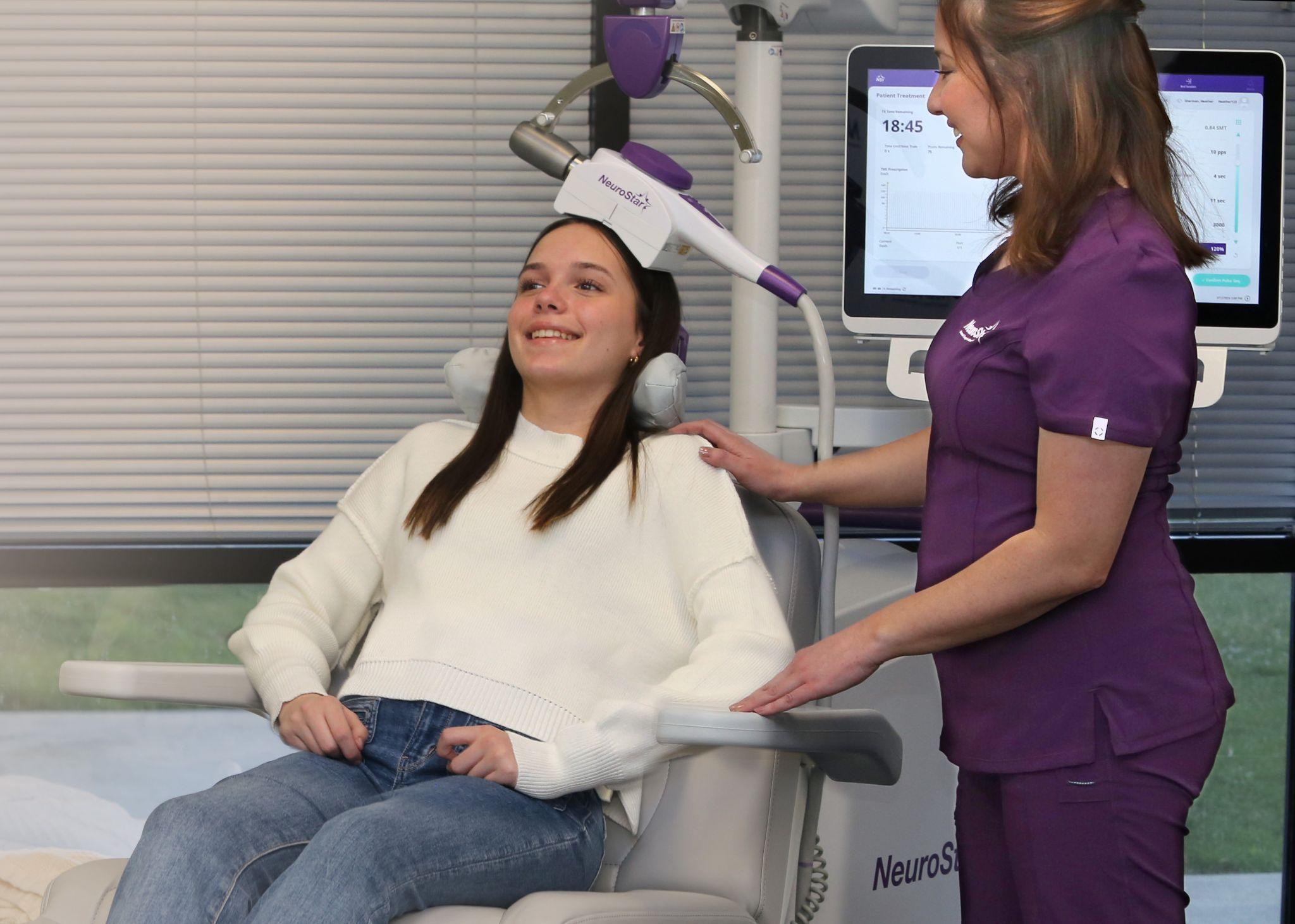
Most teenagers who qualify for TMS complete about 30 treatment sessions over six weeks, although the exact schedule depends on the treatment plan your child's psychiatrist recommends.
Traditional repetitive TMS usually involves five treatment sessions each week. Most appointments last between 20 and 40 minutes, depending on the treatment protocol and the equipment used.
One reason many families appreciate TMS is that it does not require anesthesia or sedation. Your teenager stays awake during treatment and can usually return to school, sports, work, or other normal activities immediately afterward. That flexibility often makes it easier to fit treatment into family schedules.
A typical treatment schedule includes:
- Five treatment sessions each week
- Approximately six weeks of therapy
- Twenty to forty minutes per session
- Follow-up evaluation after the initial treatment course
Consistency is important.
Attending appointments as scheduled helps your teenager receive the full treatment course and allows the care team to monitor progress closely. If scheduling challenges arise, talk with the treatment team as early as possible so they can help your family stay on track.
Throughout treatment, clinicians regularly check symptoms, answer questions, and discuss how your teenager is responding. Those conversations help guide care and make adjustments when appropriate.
When do improvements usually begin?
Every teenager responds at a different pace.
Some adolescents notice gradual improvement after about 15 to 18 sessions roughly weeks two to three of treatment while others do not experience meaningful changes until they complete the full course. A smaller number may need maintenance treatment if symptoms return later.
Doctors monitor progress using symptom rating scales, clinical interviews, and feedback from both your teenager and your family. Looking at several sources of information gives a clearer picture of how treatment is working over time.
Is TMS Painful for Teenagers?
Most teenagers tolerate TMS well.
Parents often worry that magnetic stimulation will hurt, especially during the first few treatments. In most cases, teenagers describe the feeling as a tapping sensation against the scalp rather than severe pain.
The first few sessions often feel more noticeable because your child is getting used to the treatment. Many teenagers say the discomfort becomes less noticeable as treatment continues.
The most commonly reported sensations include:
- Mild scalp tenderness
- Temporary headache
- Tapping or pulsing sensations
- Brief facial muscle twitching
These sensations are typically most noticeable in the first one to three sessions and tend to resolve within minutes to an hour after each appointment. These effects usually improve shortly after each treatment session and rarely interfere with normal daily activities.
Your child's treatment team will ask about comfort during every visit. If your teenager feels uncomfortable, the clinician can often adjust the coil position, treatment pace, or stimulation settings while still delivering effective therapy.
The goal is to keep your child as comfortable as possible throughout treatment.
Do side effects improve?
Many teenagers find that treatment becomes easier after the first few sessions. If discomfort continues, clinicians can adjust the coil position or stimulation settings.
These changes can be made without disrupting the overall treatment plan. The care team also monitors for headaches, scalp tenderness, and any other side effects throughout therapy.
TMS does not require anesthesia. Your teenager can leave the appointment on their own and return to normal activities right away: school, sports, work, or whatever their day involves.
What Risks Should Parents Understand?
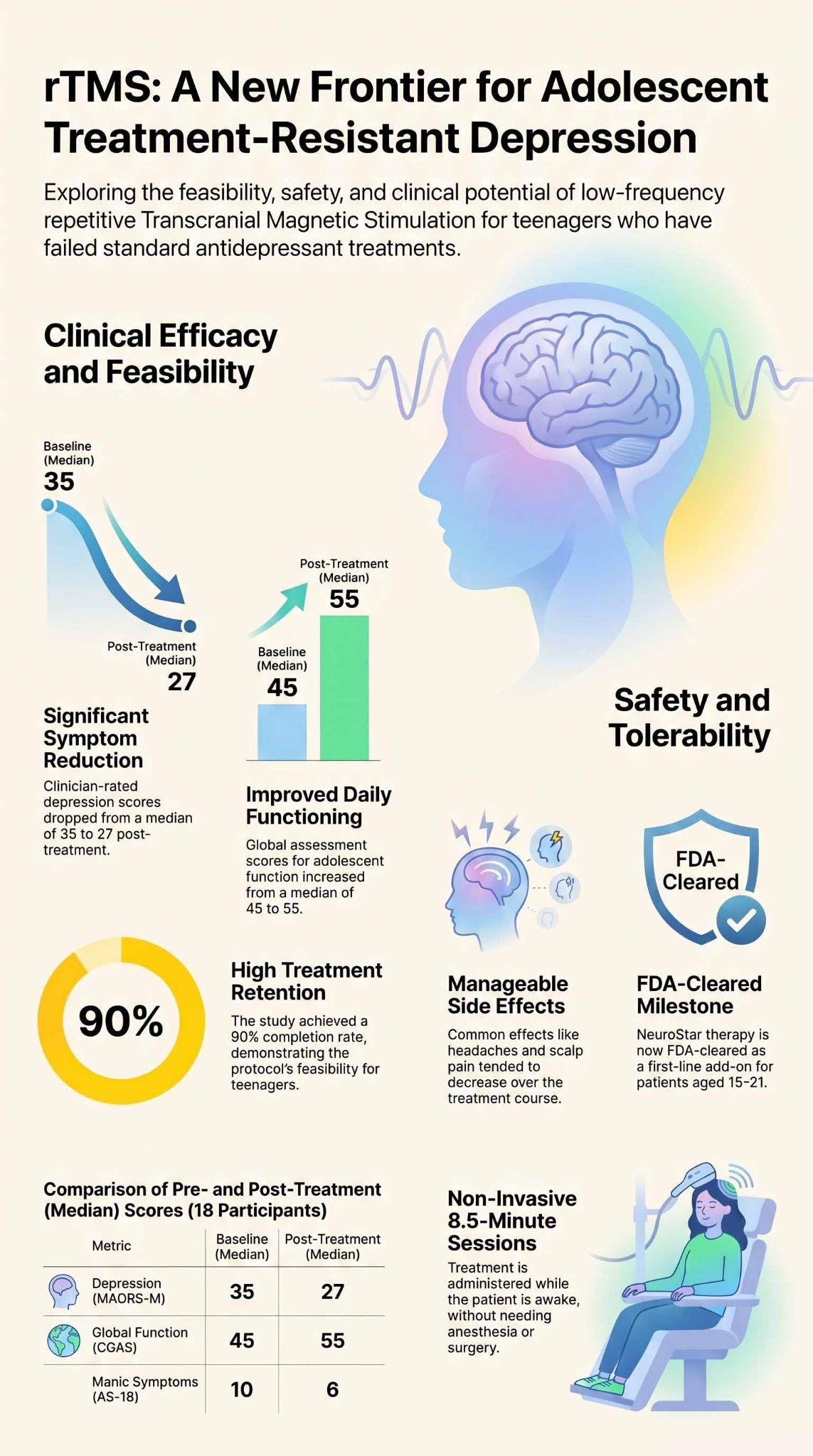
Understanding both benefits and risks is the right starting point for any treatment decision.
TMS has a favorable safety profile. Even so, doctors perform a careful medical and psychiatric evaluation before recommending it for any teenager. Your child's psychiatrist will review:
- Medical and psychiatric history
- Previous treatments and their outcomes
- Current medications
- Neurological conditions
- Any factors that could increase the risk of side effects
The goal is to confirm that TMS is both appropriate and as safe as possible for your child specifically.
Individualized psychiatric assessment and ongoing monitoring throughout treatment are standard expectations for any adolescent receiving TMS not optional steps Depression affects every teenager differently. That is why doctors tailor care to each child rather than applying the same plan to everyone.
Common side effects include:
- Mild headache
- Temporary scalp soreness
- Lightheadedness
- Brief facial muscle contractions
These side effects are usually mild, temporary, and improve shortly after treatment. Many teenagers find that the first few sessions feel the most noticeable, and discomfort often becomes less bothersome over time.
Doctors also discuss less common risks before treatment begins.
Rare but important considerations include:
- Seizure risk exists but is considered rare estimated at less than 1 in 10,000 TMS sessions in appropriately screened patients
- Temporary discomfort requiring protocol adjustment
- Medical contraindications related to implanted conductive devices
NeuroStar cannot treat patients with non-removable conductive metal near the head, cochlear implants, deep brain stimulators, or other contraindicated implanted devices. Teenagers with an increased seizure risk also need careful evaluation before treatment.
Parents should never feel uncomfortable asking questions about safety. A good treatment team welcomes those conversations and explains both the benefits and the limitations of TMS so your family can make an informed decision.
Why does ongoing monitoring matter?
Your teenager's care does not stop after the first session.
The adolescent brain continues developing well into the mid-20s, a biological reality that makes ongoing psychiatric monitoring during TMS especially important in this age group
During treatment, the psychiatrist monitors several things:
- Depression symptoms and mood changes
- Medication adjustments
- School performance
- Overall well-being
Your observations at home matter just as much. Parents often notice changes in sleep, motivation, behavior, or daily functioning before anyone else does. That information helps doctors understand how treatment is progressing and whether any adjustments are needed.
What Questions Should Parents Ask Before Starting?

Parents deserve clear answers before deciding whether TMS is right for their teenager.
A thoughtful conversation with your child's psychiatrist helps your family understand what treatment involves, what goals are realistic, and whether TMS fits into your teenager's overall care plan. Asking questions also gives you an opportunity to discuss concerns about safety, effectiveness, scheduling, and insurance coverage.
Helpful questions include:
- Is this adolescent an appropriate candidate?
- Why is TMS recommended now?
- Which previous treatments have been unsuccessful?
- How will treatment response be measured?
- What alternatives remain available?
- How will psychotherapy and medication continue during treatment?
No doctor can promise that TMS will eliminate depression or work for every teenager. Depression is a complex medical condition, and each child responds differently to treatment.
The goal is to understand both the potential benefits and the limitations before making a decision.
Parents should also feel comfortable asking how progress will be monitored, what happens if symptoms do not improve, and how the treatment team communicates with therapists, pediatricians, or other mental health professionals involved in your child's care.
Good communication helps families feel more confident throughout the treatment process.
What Challenges Do Families Commonly Face?
The treatment itself is only one part of the process. Families also need to plan for practical issues that come with a several-week treatment schedule.
Most major insurance providers including Medicare and TRICARE require documentation of at least one or two failed antidepressant trials before approving TMS coverage. Requirements vary by plan.
Coverage varies by policy, although NeuroStar is covered by many major commercial insurance plans, Medicare, and TRICARE for eligible indications.
Families often plan for transportation, school schedules, daily appointments, and maintaining consistent attendance. Experienced treatment centers can help coordinate these details while working with your teenager's existing mental health providers.
How Does TMS Fit Into a Complete Treatment Plan?
Doctors view TMS as one part of a larger treatment plan, not a replacement for everything else that supports your teenager's mental health.
Current treatment guidelines recommend combining TMS with psychotherapy, psychiatric follow-up, and medication management when appropriate. Depression often improves best when several treatments work together to address emotional health from different angles.
Comprehensive care commonly includes:
- Individual psychotherapy
- Family participation
- Medication management when indicated
- Regular psychiatric follow-up
- Progress monitoring using standardized assessments
Parents play an important role throughout treatment. You know your teenager better than anyone else. Your observations help the treatment team understand how your child is doing between appointments.
Pay attention to changes in:
- Mood and emotional shifts
- Sleep patterns
- School performance
- Relationships
- Daily routines
All of this provides valuable clinical information. Regular communication between your family and the treatment team allows doctors to adjust care when needed and ensures your teenager has support throughout the process.
Recovery often takes time. Some teenagers improve steadily, while others progress more gradually. The goal is to continue building on every positive change while responding quickly if new concerns arise.
Why Choose TMS of the Carolinas for Adolescent Care?
Choosing a treatment center is an important decision for any family.
At TMS of the Carolinas, every recommendation begins with a comprehensive psychiatric evaluation. The goal is to determine whether NeuroStar TMS is appropriate for your teenager.
NeuroStar is an FDA-cleared transcranial magnetic stimulation system. It is cleared for eligible patients with major depressive disorder (MDD), obsessive-compulsive disorder (OCD), and anxious depression
Families can expect:
- Comprehensive psychiatric assessment
- Individualized treatment planning
- Ongoing safety monitoring
- Collaboration with existing mental health providers
- Clear communication regarding benefits, limitations, and expectations
The clinical team also explains when TMS is not the right choice, including situations involving contraindicated implanted medical devices, certain neurological conditions that increase seizure risk, or when first-line treatments have not yet been fully explored.
Families deserve honest guidance. Many eligible teenagers experience meaningful improvement with TMS, but no treatment can guarantee remission.
The goal is always to recommend the option that best supports your child's long-term mental health and overall well-being.
What Should Families Remember About Adolescent TMS?
TMS may be a meaningful option for some teenagers. Specifically, those whose depression has not improved with therapy or medication.
Research gives reason for cautious optimism. Many adolescents tolerate treatment well. Some experience real clinical improvement. But outcomes depend on the right evaluation, careful patient selection, and active family involvement from the start.
At TMS of the Carolinas, we use NeuroStar, an FDA-cleared TMS system as part of an evidence-based approach to treatment-resistant depression. Every recommendation is individualized. We look at clinical history, symptom severity, and eligibility criteria before moving forward.
If conventional treatments haven't provided enough relief, the next step is a conversation. Visit TMS of the Carolinas to find out whether NeuroStar TMS may be the right fit for your teenager.
FAQs
Can teen TMS therapy be combined with SSRIs or other antidepressant medications?
Yes, adolescent TMS is commonly used alongside existing medication rather than replacing it. Many teenagers continue their current antidepressant throughout the treatment course.
The two approaches work differently — TMS targets specific brain circuits directly through magnetic pulses, while medication works systemically through the bloodstream so combining them is often part of the broader psychiatric care plan rather than an either-or decision.
Is there an accelerated or intensive TMS protocol available for adolescents with severe depression?
Accelerated TMS protocols deliver multiple sessions per day over a shorter period instead of the standard five sessions per week across six weeks.
These intensive approaches are being studied in youth depression, including adolescents with treatment-resistant depression, but they are not yet standard practice for teenagers.
They are typically considered only in specialized clinical settings after a thorough psychiatric evaluation and a detailed discussion with the family.
How does neuronavigation affect TMS adolescent dosing and prefrontal cortex targeting?
Neuronavigation uses brain imaging to guide the TMS coil to the correct location on the prefrontal cortex, specifically the dorsolateral prefrontal cortex with greater precision than standard landmark-based methods.
For adolescent TMS, accurate targeting matters because brain anatomy changes with age and development. More precise coil placement may improve treatment consistency, though neuronavigation is not yet standard practice at every clinic.
What long-term or neurocognitive effects should parents know about after teen TMS therapy?
Current evidence does not show negative long-term cognitive effects from repetitive TMS in adolescents. Studies examining neurocognitive outcomes including memory and attention have not identified lasting harm in appropriately screened teenagers.
Long-term adolescent TMS data is still developing, which is why ongoing psychiatric follow-up after completing a full treatment course remains an important part of responsible care for this age group.
Does TMS adolescent insurance coverage typically require proof of failed prior treatments?
Most insurance plans that cover adolescent TMS require documentation showing the teenager has not responded to at least one or two antidepressant medications before approving treatment. Requirements vary by plan and provider.
Families should ask the treatment clinic to verify insurance benefits before starting, as coverage policies for teen TMS therapy and reimbursement criteria vary across commercial insurance plans, Medicare, and government programs.