
Accelerated TMS Therapy and How the Faster Protocol Works

Accelerated TMS compresses depression treatment by delivering multiple transcranial magnetic stimulation sessions daily. This approach uses protocols such as intermittent theta burst stimulation (iTBS) that may complete treatment over fewer calendar days than standard TMS schedules.
Research suggests that some patients with major depressive disorder, or MDD, may have meaningful symptom improvement during accelerated schedules. But the treatment schedule depends on the specific protocol and device, and accelerated TMS isn’t a single standardized treatment. Faster treatment also doesn’t mean better treatment for every patient.
So, what does accelerated TMS involve, and how does it compare with standard TMS? Keep reading to learn more.
Key Takeaways
- Accelerated TMS uses multiple daily sessions
- iTBS can shorten individual treatment sessions
- Clinical evidence remains protocol-specific
How Does Accelerated TMS Work Differently From Standard TMS?
Accelerated TMS uses multiple treatment sessions during the same day instead of spreading one session across each treatment day. The exact schedule depends on the TMS device, stimulation pattern, treatment target, and clinical protocol.
Standard TMS for major depressive disorder usually follows a once-daily schedule on weekdays over several weeks. An accelerated schedule changes the number of daily sessions and shortens the calendar period. It doesn’t mean that the treatment itself is stronger or automatically more effective.
The stimulation method can also vary. Some protocols use intermittent theta burst stimulation, or iTBS. Others use conventional repetitive TMS or deep TMS. Each method has its own settings, including pulse count, stimulation intensity, coil design, and treatment target.
Many depression protocols target the left dorsolateral prefrontal cortex, or DLPFC. This brain region is involved in networks linked with mood regulation. Some systems use anatomical measurements to locate the target, while other protocols use MRI, functional connectivity, or neuronavigation.
That distinction matters.
The calendar may be shorter, but the treatment still requires careful dosing. A clinical team has to consider the number of sessions, the time between sessions, and the total stimulation delivered during the treatment course.
Research also shows why protocol-specific evidence matters. A 2026 multisite randomized trial studied an H1-coil protocol that used five iTBS sessions per day. The accelerated group received 30 sessions during six treatment days, followed by additional treatment sessions during the later phase of the study. The trial compared that schedule with a conventional once-daily high-frequency protocol.
What Makes Theta Burst Stimulation Faster?
iTBS uses short bursts of magnetic pulses. This allows a stimulation session to be completed in a few minutes.
A commonly studied iTBS pattern uses three pulses at 50 Hz, with bursts repeated at 5 Hz. A standard 600-pulse session takes about three minutes. The exact pulse count and session length can differ between protocols.
Because each session is short, several sessions can be scheduled on the same day. A clinic may separate those sessions with planned rest periods.
What Does A Rapid TMS Protocol Look Like?
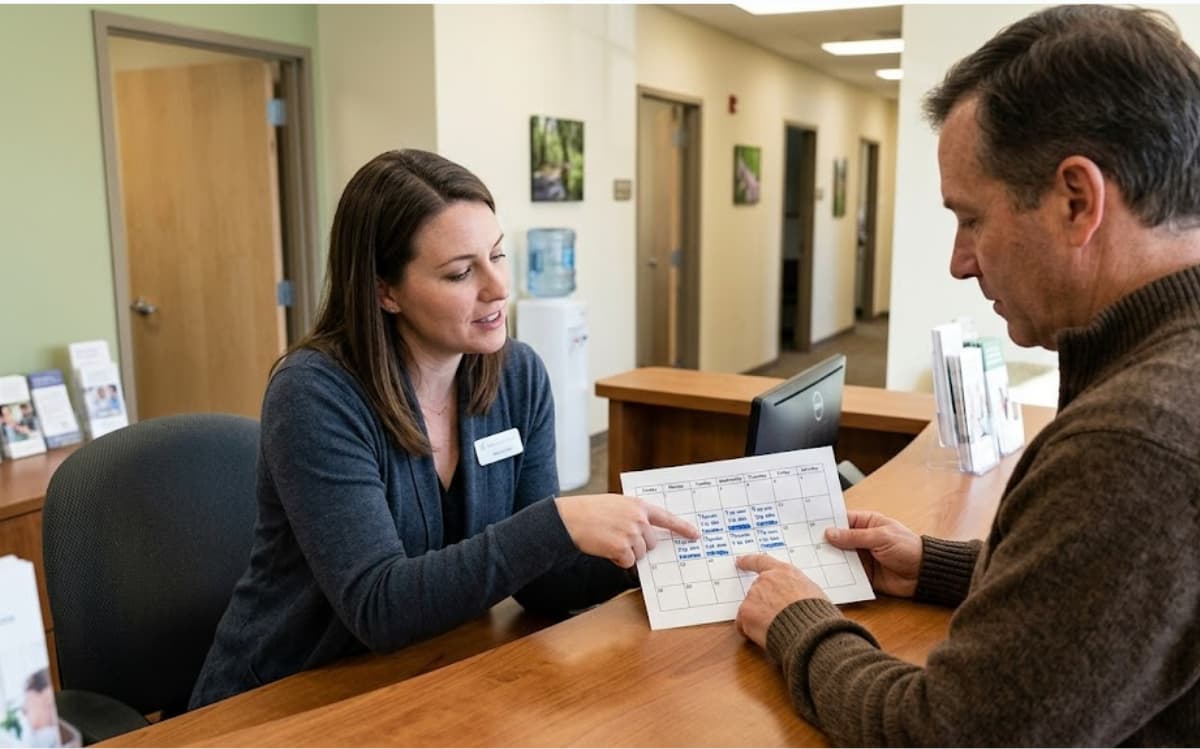
A rapid TMS protocol places several treatment sessions within the same day. The full course can therefore take fewer calendar days than a standard course.
One 2026 randomized trial enrolled 104 adults with moderate-to-severe MDD. The accelerated group received five iTBS sessions per day for six days, with a 50-minute interval between sessions. The study then continued treatment during a later phase.
Other studies have used different schedules. A 2023 case series involving 19 veterans used five iTBS sessions per day for five days. Seventeen participants completed the treatment course. Because this was a small case series, its findings cannot establish that the same schedule will produce the same response in a larger population.
A 2026 real-world study used seven iTBS sessions per day for five days in 48 adults with treatment-resistant depression. Most participants completed the five-day course, but the study found different symptom patterns among participants and had incomplete follow-up data. That variation is clinically relevant.
| Feature | Accelerated schedule | Standard schedule |
| Daily sessions | Several | Usually one |
| Calendar time | Fewer treatment days | Several weeks |
| Session length | Often brief | Varies by protocol |
| Main issue | Longer treatment days | Longer overall course |
The practical difference is scheduling. TMS still uses magnetic pulses to stimulate a selected area of the brain.
For patients considering treatment, the daily schedule can also depend on where care is provided, with TMS Therapy locations across the Carolinas offering access to treatment in several North Carolina communities. The accelerated approach changes how often treatment occurs.
What Happens During A Five Day TMS Course?
A five-day TMS course is a specific treatment model, not a universal TMS prescription. Some protocols use several sessions per day for five consecutive treatment days.
One well-known research model is Stanford Neuromodulation Therapy, also called SNT. This approach uses repeated iTBS sessions with individualized targeting of the left DLPFC. The research protocol is more specific than the general term "five-day TMS."
“SAINT, an accelerated, high-dose, iTBS protocol with fcMRI-guided targeting, was well tolerated and safe. Double-blinded sham-controlled trials are needed to confirm the remission rate observed.” – PubMed
A person receiving five-day treatment does not receive only five sessions. For example, a five-session-per-day protocol delivers 25 sessions over five treatment days.
Research outside the original Stanford setting has also examined five-day schedules. The 2023 veteran case series used 25 iTBS sessions across five days. The study reported symptom improvement, but its small sample limits how broadly the findings can be applied.
More recent research has used other five-day schedules. A 2026 naturalistic study used seven sessions per day for five days, giving 35 sessions in total. The response differed between participants, which supports the need for individualized assessment.
What Should You Expect During Your Daily Visits?
Understanding the day-to-day routine helps you prepare physically and mentally for a condensed treatment schedule. Your daily visits require spending several hours at the clinic to complete all planned stimulation blocks. You will move between active treatment rooms and comfortable resting spaces throughout your stay. Knowing this flow reduces anxiety and helps you plan your day effectively.
Each active session begins with precise coil positioning by a trained neurostar technician. The staff verifies your motor threshold and target coordinates before starting any magnetic pulses. Once positioned correctly, the device delivers short pulse bursts while you sit upright in a chair. Most patients describe the sensation as a light tapping or tingling on the scalp.
After each brief stimulation block, you transition directly to a dedicated resting area. You must wait for a specified interval, often around 50 minutes, before your next round begins. This mandatory break allows your brain tissue time to rest between repetitive stimulation sessions. You can use this downtime to read, listen to podcasts, or simply relax.
Maintaining consistent energy levels throughout these multi-session days remains extremely important for your comfort. You should pack light snacks, water, and entertainment to make your clinic stay pleasant. The clinical staff remains available during your rest periods to answer questions or address discomfort. This structured support system ensures you complete your daily treatment quota smoothly.
What Are The Safety Considerations?

Accelerated TMS has the same basic safety concerns as other TMS treatment, but the higher number of daily sessions makes monitoring especially important.
“A transcranial magnetic stimulator is a device that delivers brief duration, rapidly alternating, or pulsed, magnetic fields to induce electrical currents.” – FDA, Product Classification: Transcranial Magnetic Stimulator
TMS can cause discomfort or pain at the scalp during stimulation. Headache can also occur. These effects are usually related to the treatment site and may change as the treatment course continues.
Seizure is a rare but recognized risk of TMS. The risk depends on the treatment parameters and the patient's medical factors. A clinician should review seizure risk before treatment and follow the safety limits for the specific device.
Metal near the head can also affect eligibility. A clinical team should be told about implanted devices, metal objects, or other medical hardware before treatment begins.
TMS devices used for depression must have the appropriate FDA-cleared indication for the intended use. "FDA-cleared" describes the device's regulatory status. It does not mean that every accelerated schedule using that device has been separately cleared.
That point matters.
An FDA-cleared device may be used in a research protocol or clinical protocol with treatment settings that differ from the original clearance. The clinical team should explain which device, treatment parameters, and indication apply to the proposed treatment.
How Does Accelerated TMS Compare With Standard TMS?

Accelerated treatment can reduce the number of calendar days needed for an intensive treatment course. Standard treatment usually spreads sessions over several weeks, while fast track TMS Therapy is designed around a shorter treatment timeframe.
Neither schedule should be described as universally better.
A 2026 study comparing an accelerated H1-coil iTBS protocol with conventional high-frequency treatment found that the accelerated schedule was not inferior on the study's primary outcome.
The study included 104 adults with MDD and used a specific treatment plan. Those findings cannot be transferred automatically to every TMS device or accelerated schedule.
A separate 2026 analysis compared a five-sessions-per-day, five-day schedule with conventional once-daily treatment. Both groups showed improvement in depression scores, and the study did not find a statistically significant difference between the groups at treatment completion.
The accelerated group had 40 participants, while the conventional group had 135.
These results are useful, but they need context. Studies differ in patient selection, treatment settings, follow-up periods, and stimulation methods.
For some patients, the shorter calendar schedule may be easier to fit around work, school, or travel. For others, several treatment sessions in one day may be difficult to manage.
How Do Lifestyle Factors Impact Accelerated Treatment Success?
Your daily habits and overall physical wellness play a supporting role during an intensive treatment week. Because your brain receives frequent magnetic stimulation over short timeframes, proper self-care helps manage daily fatigue. Focusing on basic health fundamentals creates a solid foundation for your therapeutic process. Simple adjustments to your daily routine can make a noticeable difference in your comfort.
Prioritizing consistent and high-quality sleep remains essential when undergoing multiple daily sessions. Brain networks process therapeutic stimulation and build new synaptic connections during deep sleep cycles. Aim for seven to eight hours of restful sleep each night throughout your treatment period. Avoid heavy screen use or late-night activities that might disrupt your normal sleep architecture.
Hydration and regular nutrition also directly affect how your body handles frequent magnetic pulses. Mild headaches represent a common side effect of repetitive stimulation, but staying well-hydrated minimizes this risk. Drink plenty of water before arriving at the clinic and continue sipping throughout your rest intervals. Eating balanced, nutrient-dense meals prevents blood sugar dips that could increase feelings of fatigue.
Managing daily stress outside the clinic environment further supports your overall mental well-being. Try to clear your personal and professional schedule as much as possible during your treatment week. Avoid taking on high-stress work tasks or demanding social obligations while completing your daily visits. Giving yourself permission to rest fully allows your brain to focus entirely on recovery.
What Does Accelerated TMS Cost?

Accelerated TMS cost varies by clinic, device, treatment protocol, insurance coverage, and the number of sessions included in the treatment plan. There is no single national price.
The total cost may include the initial psychiatric evaluation, TMS mapping, treatment sessions, follow-up visits, and additional sessions if the treatment plan changes.
Insurance coverage can also differ. Some plans cover TMS for major depressive disorder when specific medical criteria are met, and TMS therapy for depression is designed for patients considering TMS as a treatment option for depressive disorders.
Coverage for an accelerated schedule may depend on whether the insurer recognises the specific treatment protocol and billing structure.
Self-pay rates can also vary by clinic. A shorter calendar schedule does not necessarily mean a lower total cost because accelerated treatment may involve a high number of sessions over a short period.
A clinic should provide a clear estimate before treatment begins.
Ask for the total treatment range, not only the price of one session.
Is Accelerated TMS Right For Depression Treatment?
If depression hasn't improved with standard treatment, accelerated TMS may offer a way to complete treatment across fewer calendar days. Research supports several accelerated approaches, but results can vary by protocol, device, and patient. The five-day model isn't a universal prescription. Your treatment plan still needs clinical guidance.
For the right patient, accelerated TMS can be a practical option when time is a major concern. It's still important to discuss the schedule, expected benefits, risks, and total cost with a qualified clinician. TMS of the Carolinas offers NeuroStar Advanced TMS Therapy for adults with depression at locations in Charlotte, Raleigh, and Concord. Contact their team to discuss whether this approach fits your needs.
FAQs
How Many Sessions Are In Accelerated TMS?
Accelerated TMS can involve several sessions per day, but the total number depends on the protocol. Five-day protocols may include 25 sessions when five sessions are given each day, while other protocols use different session counts.
Is A Five Day TMS Course Safe?
A five-day course can be delivered under a specific clinical protocol with appropriate screening and monitoring. Safety depends on the device, stimulation settings, session spacing, and patient factors, so a five-day schedule should not be treated as a universal prescription.
Is Accelerated TMS More Effective Than Standard TMS?
Current research does not show that every accelerated schedule is more effective than standard treatment. Studies have reported symptom improvement with accelerated protocols, but results vary by protocol and patient group.
Does Insurance Cover Accelerated TMS?
Insurance coverage depends on the patient's plan, diagnosis, medical criteria, and the specific treatment being billed. Coverage for an accelerated schedule should be confirmed with the clinic and insurer before treatment begins.
How Long Does Each Accelerated TMS Session Take?
An individual iTBS session can take only a few minutes, but the full appointment takes longer because of positioning, treatment setup, and monitoring. A day with several sessions can therefore require several hours at the clinic.
References
- https://pubmed.ncbi.nlm.nih.gov/32252538/
- https://www.accessdata.fda.gov/scripts/cdrh/cfdocs/cfpcd/classification.cfm?start_search=1&productcode=OBP