
Does TMS help with panic attacks? Current research has not established transcranial magnetic stimulation (TMS) as a reliable treatment for panic disorder. Although some studies have explored its effects on anxiety symptoms, cognitive behavioral therapy (CBT) and appropriate medication remain established treatment options for panic disorder.
TMS uses magnetic pulses to stimulate specific areas of the brain. The U.S. Food and Drug Administration (FDA) has cleared certain TMS devices for specific conditions, including major depressive disorder (MDD) and obsessive-compulsive disorder (OCD). However, clearance for these conditions does not mean TMS is an established treatment for panic disorder.
If you experience recurring panic attacks, this guide explains the evidence for TMS, its potential risks, and how it compares with established treatments.
Key Takeaways
- TMS uses magnetic pulses to stimulate targeted brain regions. Although certain TMS devices are FDA-cleared for specific psychiatric conditions, panic disorder is not an established indication for the treatment.
- Research on TMS for panic disorder remains limited and mixed. Cognitive behavioral therapy (CBT) and appropriate medication have a stronger established role in treatment.
- People considering TMS should discuss their diagnosis, treatment history, possible side effects, and realistic treatment goals with a qualified clinician.
What Does Research Say About Repetitive TMS for Panic?
TMS may help with certain mental health conditions, but current evidence does not establish it as a reliable treatment for panic disorder. Researchers have studied repetitive transcranial magnetic stimulation (rTMS) for anxiety, but findings differ depending on the condition being treated.
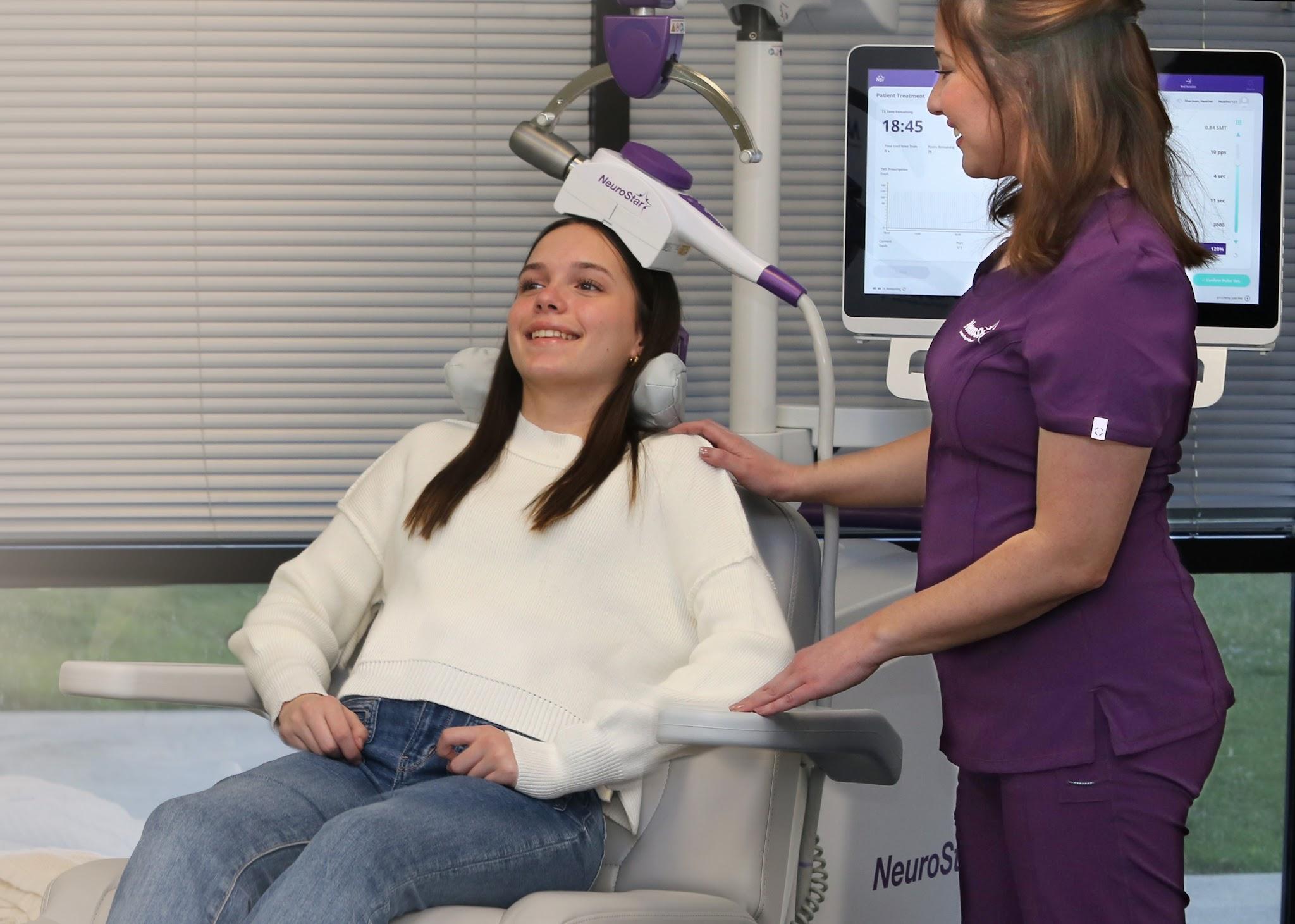
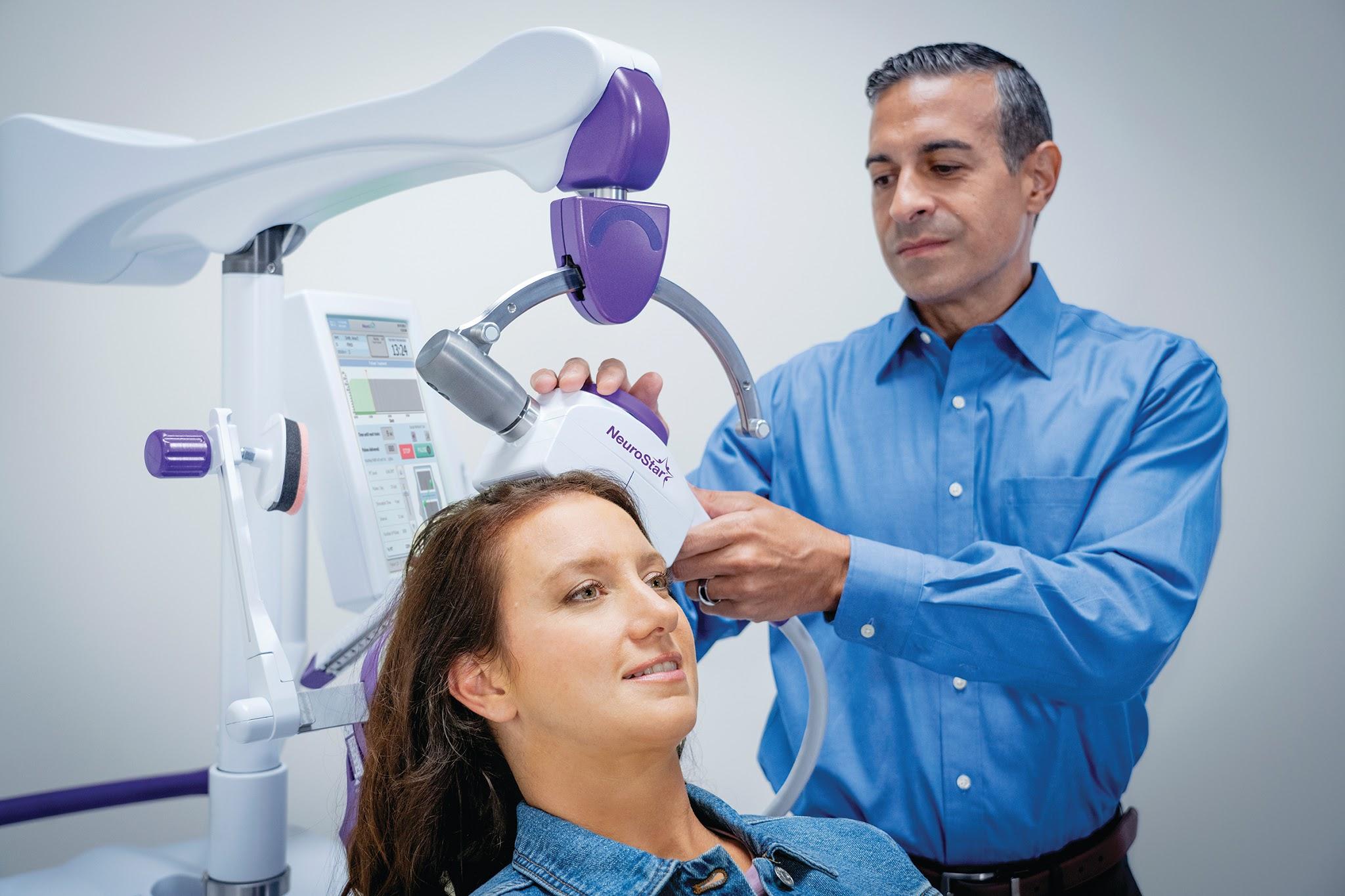
TMS delivers magnetic pulses through a coil placed against your scalp. These pulses stimulate targeted brain regions involved in mood regulation and other functions. Unlike medication, TMS does not introduce a drug into your bloodstream.
Researchers are investigating whether stimulating specific brain regions can change the symptoms associated with anxiety disorders. However, findings from depression or generalized anxiety disorder cannot automatically be applied to panic disorder.
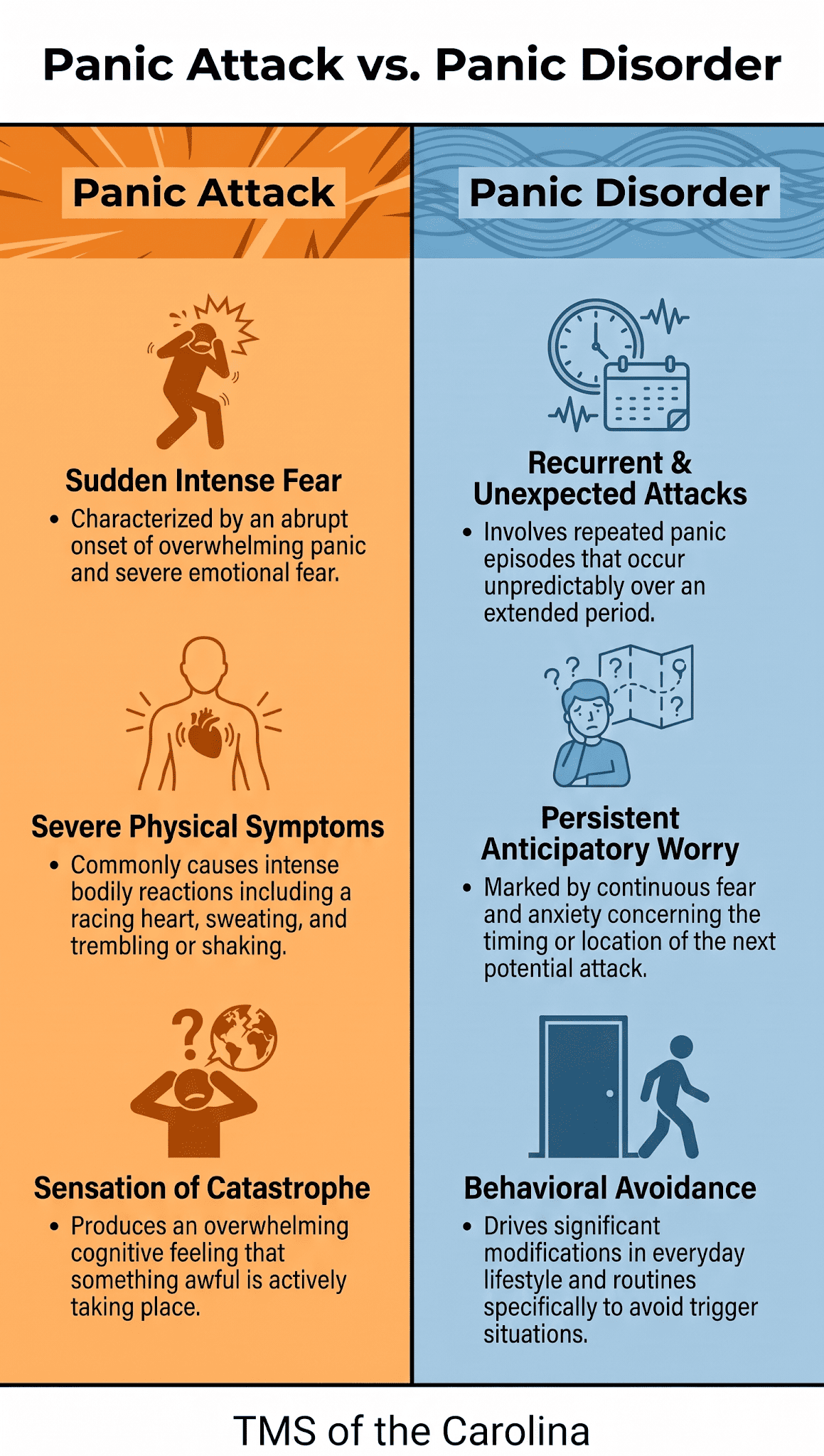
It is also important to distinguish between a panic attack and panic disorder. A panic attack is a sudden episode of intense fear or discomfort that may cause a racing heart, sweating, trembling, dizziness, or shortness of breath.
Panic disorder involves recurrent, unexpected panic attacks and ongoing concern about future attacks or changes in behavior to avoid them. A clinician can assess your symptoms and determine whether they are related to panic disorder, another mental health condition, or a medical issue.
What Does the Research Show?
A 2022 systematic review and meta-analysis examined 13 studies involving 677 participants with generalized anxiety disorder (GAD) or panic disorder. The researchers found improvements in anxiety symptoms among participants with GAD, but the results for panic disorder were different.
For panic disorder, the analysis did not find statistically significant improvements in overall anxiety or panic severity. The findings suggest that TMS may affect different anxiety conditions in different ways.
You can read the 2022 systematic review and meta-analysis on PubMed.
These findings do not rule out potential benefits for every individual, but current evidence is insufficient to establish TMS as an effective treatment for panic disorder.
What Does Research Say About TMS Treatment for Panic Disorder?
Research has not established consistent benefits of TMS for panic disorder. Small samples, varying treatment protocols, and limited follow-up make its effectiveness difficult to determine.
A Cochrane systematic review published in 2014 examined randomized controlled trials of rTMS for panic disorder. The researchers found only two eligible trials involving 40 participants.
The Cochrane review concluded:
“Only two RCTs of rTMS were available and their sample sizes were small. The available data were insufficient for us to draw any conclusions about the efficacy of rTMS for PD. Further trials with large sample sizes and adequate methodology are needed to confirm the effectiveness of rTMS for PD.” – PubMed
The review found the available evidence too limited and low-quality to determine whether rTMS is effective for panic disorder.
Several limitations explain why more research is necessary.
- Small study groups: Results from a limited number of participants may not reflect how treatment affects a wider population.
- Different protocols: Studies may use different stimulation targets, pulse frequencies, treatment schedules, and comparison groups.
- Limited follow-up: Researchers need more information about whether improvements continue after treatment ends.
- Different conditions: Studies must distinguish panic disorder from generalized anxiety disorder and depression with anxiety symptoms.
These limitations matter when you are considering treatment. A positive result in one study does not necessarily mean the same treatment will work for every person or condition.
Researchers also need to establish which outcomes matter most. These include panic attack frequency, symptom severity, avoidance behaviors, daily functioning, side effects, and long-term results.
For now, the evidence does not support presenting TMS as an established treatment for panic disorder.
Can TMS for Panic Attacks Trigger or Worsen Symptoms?
Some people report discomfort or changes in mood during TMS, but available evidence does not establish how frequently treatment causes or worsens panic symptoms. If you notice new or worsening symptoms during treatment, tell your healthcare provider.
Common TMS side effects include scalp discomfort and headaches. These effects are often mild, although your experience may depend on the treatment protocol and individual circumstances.
Some people have also reported anxiety, restlessness, or mood changes during treatment. However, individual reports cannot establish whether TMS caused these symptoms or how frequently they occur.
An adverse-event report in the FDA’s MAUDE database describes the following experience:
“I took 5tms treatments.Advertised as no side effects.I experienced panic attacks, dizziness, hyperactivation, nausea and most concerning temporary loss of hearing i now have heightened anxiety.” – FDA MAUDE
FDA MAUDE reports can identify potential safety signals, but they cannot establish that TMS caused a reported event or determine how frequently it occurs.
What Should You Do if Symptoms Get Worse?
Tell your treating clinician if panic symptoms become more frequent, intense, or disruptive during treatment. Your clinician can assess when the symptoms started, review your treatment plan, and consider whether another explanation or a change in care is needed.
Seek emergency medical attention for chest pain, fainting, severe difficulty breathing, or new neurological symptoms. Do not assume these symptoms are caused by a panic attack, even if you have experienced panic attacks before.
If you are experiencing a mental health crisis or thoughts of suicide in the United States, you can call or text 988 to reach the Suicide & Crisis Lifeline. Call 911 for an immediate medical emergency.
TMS should be considered within a broader treatment plan that accounts for your diagnosis, medical history, and response to previous treatments.
What Should You Know About Whether TMS Works for Panic Disorder?
TMS is used for certain psychiatric conditions, but it is not an established treatment for panic disorder. Before considering treatment, ask your clinician which diagnosis TMS is intended to address.
For example, someone who experiences panic attacks alongside major depressive disorder may be evaluated for TMS as a treatment for depression. However, improvement in depressive symptoms does not guarantee that panic attacks will decrease.
Certain NeuroStar TMS indications include the treatment of depressive episodes and the reduction of anxiety symptoms in adults with MDD who have not achieved satisfactory improvement with previous antidepressant medication treatment. NeuroStar is also cleared as an adjunctive treatment for OCD in adults.
These indications do not establish TMS as a treatment for panic disorder alone. You can review the device’s FDA clearance documentation for information about its regulatory status.
If you are exploring TMS because depression has not improved with previous treatment, a clinician can assess whether you may be eligible. You can also review the conditions addressed by TMS to understand how established indications differ from uses that require further research.
Your assessment may include the following considerations:
- Diagnosis: Whether you have panic disorder, depression, another condition, or more than one diagnosis.
- Treatment history: Whether psychotherapy, medication, or other approaches have helped.
- Medical history: Whether you have health conditions or implanted devices that affect TMS eligibility.
- Treatment goals: Which symptoms you want to address and what outcomes are realistic.
- Evidence: Whether research supports TMS for the specific condition being treated.
Do not assume that TMS is the right choice simply because other treatments have not worked. Your provider should explain the evidence, potential risks, and available alternatives.
What Other Treatments Are Available?
Cognitive behavioral therapy (CBT) is an established treatment for panic disorder. It helps people recognize panic-related thoughts and behaviors and develop strategies to manage physical sensations and feared situations.
Medication may also help. Depending on your circumstances, a clinician may discuss selective serotonin reuptake inhibitors (SSRIs), serotonin-norepinephrine reuptake inhibitors (SNRIs), or other appropriate options.
Some people benefit from a combination of psychotherapy and medication. The right approach depends on your diagnosis, symptoms, medical history, preferences, and previous treatment response.
| Treatment | Role in Panic Disorder | Key Consideration |
| Cognitive behavioral therapy (CBT) | Established treatment option | Helps you manage panic-related thoughts, sensations, and avoidance behaviors. |
| Medication | Established treatment option when clinically appropriate | Benefits and side effects vary by medication and individual. |
| TMS | Not an established treatment for panic disorder | May be considered for a separate condition when the person meets the relevant treatment criteria. |
| Combined treatment | May be appropriate for some people | A clinician can determine whether combining approaches fits your needs. |
You can also read about the differences between TMS therapy and antidepressant medication to understand how their roles differ when treating depression.
The important point is to choose treatment based on the condition being addressed, rather than assuming that an approach used for one mental health condition will work for another.
Where Can You Discuss TMS Treatment Options?

If you experience panic attacks alongside depression, a clinical evaluation can help determine which conditions need treatment. At TMS of the Carolinas, a clinician can review your treatment history, discuss eligibility for an FDA-cleared TMS indication, and explain the evidence, risks, alternatives, and expected outcomes.
If you live near Concord, North Carolina, you can discuss these questions with the team at the TMS of the Carolinas Concord clinic. An evaluation can help you understand whether TMS may be appropriate for an eligible condition.
TMS is not an established treatment for panic disorder alone. Any decision to use it should be based on an appropriate clinical assessment and a clear understanding of the evidence.
Does TMS Help With Panic Attacks?
Current research has not established transcranial magnetic stimulation (TMS) as a reliable treatment for panic disorder. Although researchers continue to investigate its effects on anxiety symptoms, the available evidence does not show a consistent benefit for panic disorder.
CBT and appropriate medication remain established treatment options. If you also have depression, a clinician may evaluate whether TMS is appropriate for that condition, but improvement in depression does not guarantee fewer panic attacks.
Discuss your symptoms, treatment history, and concerns with a qualified healthcare professional before making a treatment decision. The goal is to identify an approach supported by evidence for your specific condition.
FAQ
Does TMS Help With Panic Attacks in Real-World Practice?
TMS has not been established as a reliable treatment for panic disorder. Research findings remain limited and mixed, so clinicians generally consider established options such as CBT and appropriate medication when treating panic disorder. If you also have depression, a clinician can assess whether TMS may be suitable for that separate condition.
Can TMS Make Anxiety or Panic Attacks Worse?
Some people report increased anxiety or panic symptoms during TMS, but individual reports do not establish how often this occurs or whether TMS caused the symptoms. Contact your treating clinician if your symptoms become worse, more frequent, or harder to manage during treatment.
Is TMS FDA-Cleared for Panic Disorder?
Panic disorder is not an established FDA-cleared indication for NeuroStar TMS. The device has specific indications for conditions including major depressive disorder and adjunctive treatment for OCD in adults. Your clinician can explain which indication applies to your circumstances.
Is CBT Better Than TMS for Panic Disorder?
CBT has a stronger established role in treating panic disorder than TMS. A clinician may also recommend medication or a combination of approaches, depending on your symptoms, medical history, preferences, and previous treatment response.
Can TMS Help With Panic Attacks and Depression at the Same Time?
TMS may help eligible patients with depression who also experience panic attacks, but improvement in depression does not guarantee improvement in panic symptoms. A clinician should assess both conditions separately and explain which symptoms the proposed treatment is intended to address.